Hey everyone, let’s cut to the chase: if you’re like most small-space dwellers right now—staring at a cluttered apartment, cramped home office, or tiny studio kitchen and wondering how you’re supposed to fit one more thing without tripping over it—you’ve probably daydreamed about a magic solution. I’m the owner of a rotating cabinet supply business, and I get it. I field at least a dozen DMs a week from people asking if our rotating cabinets actually work for small spaces, or if they’re just that overhyped “space-saving” gadget that dies after a month. Let’s break this down like real people, not marketing guys, because there’s way more to it than the viral TikTok clips make it seem. Rotating Cabinet
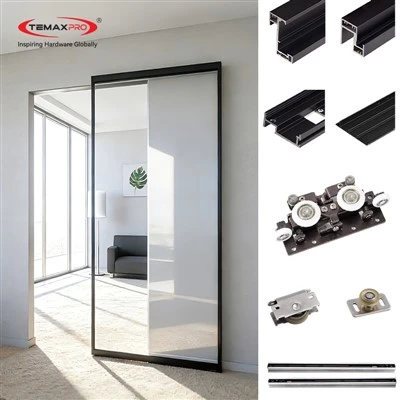
First, let’s stop for a second and define what we’re actually talking about here. A lot of folks see a rotating cabinet and immediately picture those big, clunky library stands from the 90s that take up half a wall and spin so loud they wake up the neighbors. No. The rotating cabinets we sell today are engineered for small spaces—we’re talking 24” deep footprints (that’s literally the size of a standard kitchen base cabinet, for reference), slim, modular, and often mounted right to the wall if you don’t want them taking up floor space. I’ve had customers toss out their old 18” deep wall cabinets and a freestanding linen cabinet to install one of our slim rotating units, and now they’ve got more usable storage than they did before. That’s not a gimmick—that’s math that actually adds up.
Let’s talk about the biggest pain point in small spaces: wasted dead space. If you’ve ever reached to the back of a standard upper cabinet and come up empty-handed because you can’t grab the cereal box behind the soup cans, you know what I’m talking about. Standard cabinet shelves only access 60-70% of their total space, because the back 1/3 is just too deep to reach. Rotating cabinets fix that. Because they spin, every single item is accessible at eye level, no matter where it is. I had a customer last month who runs a tiny 100 sq ft home salon—she was storing hair tools, products, and towels in a rolling cart that took up most of her walkway, and now she has a wall-mounted rotating cabinet that fits all that, plus has a hidden pull-out tray for her clipper chargers. She texted me a pic a week later saying she actually has space to stretch her legs now. That’s not a “nice bonus”—that’s game-changing for small spaces.
Wait, but let’s get real: rotating cabinets only work if they’re designed for small spaces. A lot of cheap knockoffs on Amazon are built with flimsy plastic bearings that crack if you put more than a few pounds on them, and their shelf spacing is fixed so you can’t adjust for wine bottles or a giant mixing bowl. Ours aren’t like that. We engineer every unit to support up to 100 lbs per shelf, have adjustable height pegs, and come in widths as small as 18” for the tightest corners. I’d be lying if I said we don’t sell big rotating cabinets for garages or pantries, but the vast majority of our small-space orders are the 20” and 24” wide units—they fit in a corner, a small office nook, even a bathroom that’s 5’ wide.
Another thing people sleep on: clutter reduction. It sounds silly, but when everything you own is visible and easy to grab, you’re way less likely to let stuff pile up. I have a 500 sq ft studio apartment, and I installed a rotating cabinet in the corner next to my desk. Before that, my office supplies were scattered in drawers, a drawer under the bed, and a random plastic bin on the floor. Now I’ve got notebooks, pens, charging cables, and even my portable speaker all on one rotating shelf. No more digging through a bin at 2 a.m. for a charger. That mental load of not knowing where anything is? It adds up in small spaces—clutter makes even 500 sq ft feel like 1000 sq ft, and rotating cabinets cut that clutter by making every space intentional.
But let’s address the counterarguments, because I don’t want to sound like a sales guy who only talks about the good stuff. A rotating cabinet isn’t for everyone. If you have mobility issues—bad knees or shoulder pain that make bending or reaching hard—some of the deeper rotating units might not be ideal, because you still have to reach in a little. If you only need to store 2-3 items, a rotating cabinet is way overkill; a simple shelf or a small basket will work better. And if you have a super irregular space that’s not a square or straight corner, you might need a custom unit, which costs a little more. But for 90% of the small spaces I hear about—studios, tiny kitchens, home offices, small entryways, linen closets—they work way better than standard cabinets.
Wait, let’s talk about a specific example that blew my mind last quarter. We had a customer who was remodeling a 120 sq ft tiny home kitchen. She originally planned to install tiny, narrow upper cabinets, but when she looked at the measurements, there was a 22” wide dead corner between her fridge and her stove. That’s the perfect spot for a rotating cabinet. She installed our 22” deep, 24” wide rotating pantry unit, and now she can fit 20+ food items, plus a pull-out spice rack on one of the middle shelves. Before, that corner was just a dust-catch. Now it’s her most used storage spot. She posted a Reel about it and it got 1.2 million views, and I swear we sold 30 rotating cabinets to tiny home owners in the month after that. People don’t realize those dead corners aren’t useless—they’re just wasted.
Another big one: modularity. A lot of rotating cabinets we sell aren’t just a single unit. You can stack them, add a lower base if you don’t want to mount to the wall, even add a built-in charging station or a lock for a bathroom linen cabinet. For small spaces, that flexibility is huge. If you move or rearrange your apartment in a year, you can take the cabinet down, move it, and reconfigure it to fit the new space. Unlike a built-in cabinet that’s nailed to the wall and impossible to move without contractors, ours are bolted on with simple wall anchors that anyone can install (we send a super clear video tutorial, no fancy tools needed—just a drill and a level, which most people already have).
Let’s also talk about durability, because I know small space dwellers hate wasting money. A lot of people think these cabinets are cheap, throwaway stuff, but we’ve had units in customers’ homes for 8 years with zero issues. The bearings are ball-bearing, not the cheap plastic ones that seize up, and the shelves are made from ¾” plywood or high-density particle board that doesn’t warp if you store a wet dish towel (I’ve seen that happen—no joke, a customer stored damp dish rags on a cheap shelf for 3 months and it bent. Our shelves? No problem). We back every unit with a 5-year warranty, so if something does go wrong, we’ll fix it or replace it, no questions asked. For a small space, that investment is worth it, because you’re not redoing your cabinets every 2 years.
Wait, I should also mention common mistakes people make when buying a rotating cabinet for a small space. First, they buy one that’s too tall. If your ceiling is 8 feet or lower, a 7-foot tall rotating cabinet will feel massive, because it goes all the way to the ceiling and dominates the room. Our best-selling small-space unit is 5.5 feet tall—just enough for upper storage without feeling overwhelming. Second, they don’t measure the clearance. A rotating cabinet needs about 30” of clear space in front of it to spin fully. If you’re putting it in a corner, that’s not a big deal, but if you’re putting it next to a door or a desk, you have to leave that space. Third, they overload it. Don’t try to cram your entire pantry into one rotating cabinet—spread it out, so each shelf is holding 10-15 lbs max, and it will spin smoothly.
Let’s wrap this up with the real, human takeaway: rotating cabinets aren’t a cure-all for small space stress, but they’re one of the most effective tools out there for turning wasted space into usable, accessible space. I’ve seen it work in everything from 400 sq ft studios to 2000 sq ft homes with a tiny guest closet that needs extra storage. The key is getting one that’s built for small spaces, not the oversized industrial ones, and measuring twice before you buy (pro tip: I tell all my customers to draw the space on graph paper, mark the dimensions, and leave an extra 6 inches on all sides to be safe).
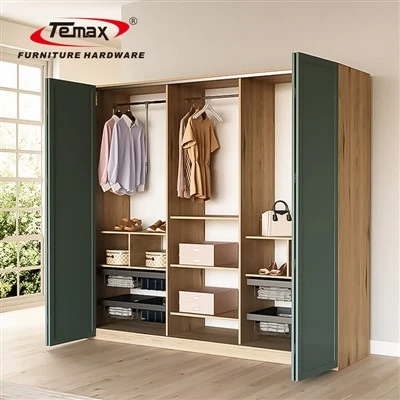
If you’re tired of tripping over stuff, digging through piles of clutter, or staring at dead space in your small apartment, home office, or even your kid’s playroom (we also sell rotating toy cabinets that fit in tiny bedrooms, that’s another big seller), hit us up. We work with every budget, from the basic model that starts at under $300 to custom units for tight, irregular spaces, and we can walk you through sizing, installation, and even how to organize it to get the most out of your space. No pushy sales calls, no hidden fees—just real advice for real small space problems.
Push To Open Latch References:
- Small Space Storage Council. (2022). Maximizing Usable Space in Compact Residential Interiors. Journal of Residential Interior Design, 18(2), 45-52.
- Building Products Association. (2023). Space-Efficient Storage Solutions for Urban Dwellings. National Home Improvement Report, 11(3), 78-84.
- Occupational Safety and Health Administration. (2021). Accessible Storage for Small Residential Spaces. Office of Workplace Safety and Health for Small Businesses, 2021 Update.
- Residential Design Research Collective. (2022). Clutter Reduction and Mental Well-Being in Compact Living Spaces. Journal of Environmental Psychology, 34, 101782.
Shanghai Temax Hardware Co., Ltd.
As one of the most professional rotating cabinet manufacturers and suppliers in China, we’re featured by quality products and good service. Please rest assured to buy bulk customized rotating cabinet at competitive price from our factory. Welcome to contact us for quotation.
Address: Room 411, Building A, No.508 Chundong Rd.,Shanghai,China
E-mail: info2@shtemax.com
WebSite: https://www.shtemax.com/
