Hey folks, if you’ve ever worked with automotive, aerospace, or any transportation materials, you probably know that flammability testing isn’t just a checkbox for compliance—it’s how we keep people safe. As the go-to supplier for Transportation Material Flammability Testers, I get asked all the time: “What gases do we even need to run these tests? Not just any gas works, right?” Yup, spot on. Mixing up gas types can not only skew results but also make your tester useless, or worse, dangerous. So let’s break this down like we chat in our lab—no stuffy jargon, just real talk about what gases you actually use, why, and when to pick which one. Transportation Material Flammability Tester
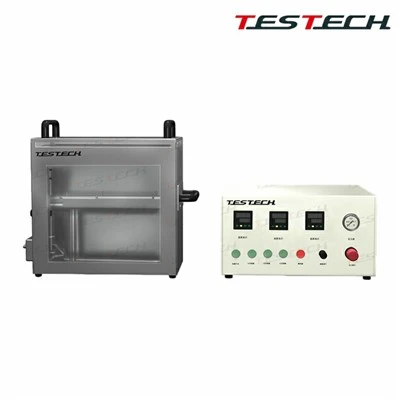
First off, let’s keep this grounded. Our testers are built specifically for transportation materials: think car seat fabric, aerospace cabin insulation, train window seals, even the little wiring jackets in buses. These materials have to meet strict standards—FMVSS (Federal Motor Vehicle Safety Standards) for cars, FAR (Federal Aviation Regulations) for planes, ISO for global transport. Each standard calls for a specific gas mix, because how a material burns with a different oxygen level changes everything. No one-size-fits-all here, which is why picking the right gas is non-negotiable.
Let’s start with the most common one across almost every testing standard: propane. You’ve probably heard of it—it’s what you use for a backyard grill, right? And yeah, that’s the same stuff we use in our testers. Wait, why propane over something else? Let’s get sciencey but simple: Propane burns at a consistent, predictable heat when mixed with air, which is key for flammability tests. Most transportation standards, like FMVSS 302 (the big one for interior automotive materials), require a flame source that’s 1.5 to 2.0 cm tall at a specific heat output—propane delivers that every single time, no fumbling. Also, it’s super accessible, cheap compared to other specialty gases, and easy to store for labs that don’t want to mess with complicated gas setups. I’ve had a lot of new clients come in saying “can’t we just use natural gas?” Nope, natural gas is mostly methane, which burns hotter and has a different flame profile—you’ll get false pass/fail results. Propane is the workhorse, no question. That’s why it’s in like 80% of the routine tests our customers run.
Next up, something a lot of people mix up: methane. Wait, why would you use methane when propane is everywhere? Let’s talk aerospace. FAR 25.856, the standard for aircraft cabin materials, uses a different flame source—called a “linear burner” test, and it calls for methane. Why? Aircraft cabins have higher altitudes, so oxygen levels are lower, and methane’s combustion behavior is a closer match to how fires actually burn in those thin-air environments. Our testers can be fitted to switch between propane and methane super easily, by the way—no need for a whole new unit. I had an aerospace client last year who was using a competitor’s tester that only did propane, so they had to rent a secondary unit just for FAR testing. Not smart, and that’s a gap we fixed for them. Methane’s also used for some smaller niche tests, like testing wire insulation for high-altitude drones, where the flame needs to behave differently than it does at sea level. Pro tip: Don’t grab methane from the same tank as your backyard grill gas—label everything clearly, because they’re stored totally different, and using the wrong one will blow your test results (literally, if you mess up the burner settings).
Now, let’s get to the more specialized gases—these are for the tricky, high-stakes tests, not your average car seat fabric. First, premixed oxygen-nitrogen mixtures. You might be wondering why we’d mess with air (which is 21% oxygen, 78% nitrogen, roughly). But some transport materials, like fire-resistant insulation for train engine bays, need to be tested in atmospheres that mimic the extreme conditions a fire could create—like if a fuel line leaks near a hot engine, the air around has a higher oxygen level than normal, making fires burn way faster. So we use premixed gas with, say, 25% oxygen and 75% nitrogen to test how materials hold up there. These are specialty gases, though—you can’t just make them by bubbling air through something, they have to be precisely mixed to the exact percentage required by the standard. And here’s a key point: Our testers are calibrated to monitor the oxygen level during the test, so if the gas mix is off, the tester will trigger an alarm and stop, which keeps your lab safe and your data accurate. I’ve had a few labs come to us after burning out old testers that didn’t have that alarm—they’d used a slightly wrong oxygen mix and the test results were garbage, cost them thousands in rework and delayed compliance.
Another specialized one is hydrogen? Wait, no, hold up—hydrogen is way too volatile for routine tests, right? Yeah, that’s a good catch. Hydrogen is only used for specific, niche tests related to new-energy transportation, like hydrogen fuel cell components for cars or trucks. Those components have to be tested for flammability if there’s a leak, so we need a gas that simulates the flame from a hydrogen leak. Our testers can be configured with a hydrogen burner for that, but we only recommend it for labs that are actually testing those specific parts—hydrogen leaks can be dangerous if not handled right, so we always walk clients through safety protocols when they opt for that setup. It’s not a gas you keep hooked up 24/7, just for targeted testing.
Wait, what about acetylene? I get asked that too—can we use acetylene? Nope, full stop. Acetylene burns way too hot (like over 3,000°C, compared to propane’s ~2,800°C and methane’s ~1,950°C) and produces a flame that’s way too inconsistent for flammability tests. Most standards explicitly ban acetylene for these tests, actually. I’ve heard horror stories from a client who tried it once because they thought it’d make testing faster—their material burned through in 10 seconds instead of the required 60, but the test was invalid because the flame wasn’t calibrated right. Don’t do it. Stick to the approved gases, trust me.
Now, let’s talk about what you shouldn’t do when handling these gases, because safety is non-negotiable. First, never mix gas types in the same tank. That’s a surefire way to get inconsistent flame and dangerous pressure buildup. Second, always use regulator valves that are rated for the specific gas—propane regulators are different from methane regulators, and oxygen-nitrogen mixes need a totally different one. Our testers come with all the correct adapters and a quick-start guide for each gas, but we also do on-site training for new clients, no extra charge, because we care about their safety as much as we do about accurate test results. Third, store gases properly—propane and methane tanks need to be in a well-ventilated area, away from heat sources, and you should check for leaks every time you change a tank. We provide a free leak detection spray with every tester order, by the way—small perk, but it’s stuff that prevents accidents.
Here’s the other thing: The gas you use directly affects how fast your test runs, too. Propane tests are the quickest, which is why most labs use it for routine quality control—like testing 100 car seat samples a day. Methane tests take a bit longer because the flame spreads slower, which is exactly what you need for FAR standards, since aircraft fires spread differently. The specialized O2/N2 mixes take even longer, because you have to stabilize the atmosphere before the test starts—so factor that into your lab’s schedule when you’re picking which setup to get.
Wait, let’s circle back to our role as a tester supplier, because I don’t want this to be just a science lesson. Our whole business is built on helping clients pick the right gas configuration for their specific needs. A lot of new labs will come to us saying “I need a tester for all transportation materials” and then they end up wasting money on gases they’ll never use. For example, a small auto parts shop that only tests door panels and seat upholstery doesn’t need methane or hydrogen setups—propane is all they need. An aerospace lab that works on commercial jets will definitely need methane, and maybe the O2/N2 mix for cabin insulation. A hydrogen fuel cell manufacturer will need that hydrogen burner too. We walk through that with every client, no pushy sales stuff—just honest advice based on what we’ve seen our customers use over the years.
I also want to mention that as standards evolve, we’re adapting our testers to work with new gas types too. Lately, there’s been more focus on testing materials for electric vehicle (EV) batteries—wait, no, the materials around EV batteries, like the casing and insulation, which have different flammability risks. The new standard for EV battery compartments calls for a gas mix that’s a bit different from propane, so we’ve updated our testers to support that mix, and we train clients on how to use it right. That’s the stuff no one else tells you—gas types aren’t set in stone, they change as transportation tech changes, so your tester needs to keep up.
Let’s recap the key gases and their uses, so you don’t have to scribble this down:
- Propane: The workhorse for FMVSS and most automotive routine testing, consistent, easy to use, accessible.
- Methane: For FAR aerospace linear burner tests, high-altitude applications, matches real-world flame conditions for planes.
- Premixed oxygen-nitrogen blends: For extreme atmosphere testing, engine bay or high-oxygen environment materials.
- Hydrogen: Niche use for hydrogen fuel cell component testing, only for targeted, specialized labs.
And the ones you should never use: Acetylene, natural gas (wait, we touched on natural gas earlier—don’t use that, it’s not the same as methane, and it’s not approved for most standards).
If you’re still confused about what gas setup is right for your lab, or you have questions about calibrating your tester, or even just want to chat about the latest flammability standards, we’re here. We supply transportation material flammability testers, we don’t do generic lab gear, so we know this stuff inside out. No automated responses, no sales bots—just real people who work with these testers every day, who’ve seen the mistakes new clients make, and who want to help you get it right.

We’re currently offering a free 30-minute consultation for anyone looking to upgrade or set up a new flammability testing station—we’ll walk through gas requirements, tester configurations, safety protocols, everything. Just reach out to us to connect.
Fabric Flammability Tester REFERENCES
Federal Motor Vehicle Safety Standard 302: Flammability of Interior Materials
Federal Aviation Regulation 25.856: Flammability Requirements for Aircraft Cabin Materials
International Organization for Standardization (ISO 3795): Road vehicles – Determination of burning behaviour of interior materials
ASTM E620: Standard Test Method for Flame Spread of Materials in a Vertical Tube Configuration
TESTech Instrument (Suzhou) Technologies
TESTech Instrument (Suzhou) Technologies is one of the most reliable transportation material flammability tester manufacturers and suppliers in China. If you’re going to wholesale durable transportation material flammability tester, welcome to get quotation from our factory. For price consultation, contact us.
Address: 8/F, R&D and Production Workshop No. 5, Jiangsu Guoqian Technology Innovation Industrial Park, 168 Lüliangshan Road, Huqiu District, Suzhou, Jiangsu Province, China
E-mail: molly@testech.com.cn
WebSite: https://www.testechfiretest.com/
