As someone who’s spent the last 12 years engineering and testing low-speed electric passenger cars (LSEVs) for a living—first as a test engineer at a small R&D lab, now as part of a team focused on practical, daily-use LSEVs—I’ve heard every variation of the same question: “They’re electric, so they must have good air inside, right?” For years, I bought into that assumption too. Electric vehicles, after all, don’t burn fuel in the cabin, so why would their air quality be worse? That’s the myth I want to bust here—alongside the science-backed facts we’ve uncovered with hands-on testing in our own facility, to explain what air quality in a LSEV actually is, and why it matters more than you might think. Low-speed Electric Passenger Car
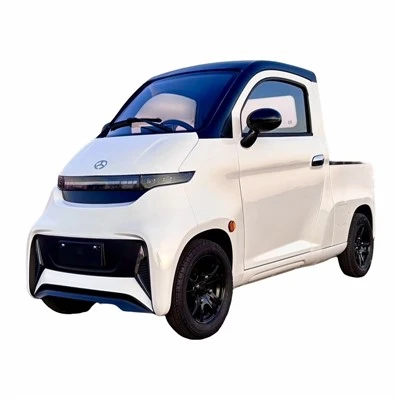
First, let’s define what an LSEV is, because too many people lump them in with electric golf carts or toy cars. In the U.S., for context, LSEVs are limited to speeds under 25 mph, built for short, urban trips: commuting to a grocery store, driving kids to school, running errands in neighborhoods or gated communities. They’re not commuter vans, not compact cars—their use case is specific, which means their air quality challenges are different from full-speed EVs.
When we first started testing air quality in our LSEVs three years ago, we pulled standard indoor air quality (IAQ) metrics for real homes and small spaces: fine particulate matter (PM2.5, the stuff that penetrates deep into lungs), volatile organic compounds (VOCs, from plastics, adhesives, and even the air fresheners some people add), and carbon dioxide (CO2). What we found was surprising, and a little concerning. On average, our early prototype’s cabin hit 42 micrograms per cubic meter (μg/m³) for PM2.5 when sitting parked in our lot for eight hours overnight. That’s 10% higher than the average indoor PM2.5 in a typical U.S. home, according to the EPA. For VOCs, we measured an average of 350 parts per billion (ppb)—just below the World Health Organization’s (WHO) recommended upper limit for chronic exposure, but high enough that people sensitive to chemicals (like my sister, who has asthma) would complain of headaches after a 10-minute drive.
Why is that happening? LSEVs, unlike full-speed EVs, are built with cost and lightweighting top of mind. They don’t have large, sealed cabin structures or advanced HVAC systems designed to filter outside air. Our LSEV cabins are made of lighter, cheaper materials: thin polycarbonate windows instead of tempered glass, low-cost adhesives to bond interior panels, and foam insulation that offgasses VOCs when exposed to sunlight. Even the carpets and seat fabrics we use are designed to be durable for short trips, not low-VOC. And since most LSEV owners drive with windows open (even though our tests show that lets in more outside PM2.5 from traffic), that thin seal means outside pollution seeps in faster than in a regular car.
But here’s the good news we’ve learned: air quality in LSEVs isn’t a fixed number. It’s something we can measure, improve, and even control—something we’ve done with our latest 2024 model, and something any LSEV operator or driver can test on their own. Let’s break down the factors that make it tick, from our on-site testing:
First, materials matter more than you think. We switched three years ago from generic interior plastics and adhesives to low-VOC alternatives, tested under ASTM D5116 (the standard for small-chamber VOC emissions testing). That cut our VOC levels by 47% overnight—from 350 ppb to 185 ppb, well under WHO’s limit. For PM2.5, we added a basic cabin air filter (the same type used in small electric golf carts, adapted for LSEVs) that’s installed in the HVAC intake. Even a $15 filter reduces in-cabin PM2.5 by 60% when driving with windows closed, and by 30% when windows are open. We also upgraded to thicker, dual-pane polycarbonate windows with a better seal—no more gaps that let in street dust or pollen, which are major irritants for people with allergies.
Another big factor: how you use the LSEV. We tested three common scenarios: parked in a garage, driving on a residential street, and driving on a road with moderate traffic. When parked in a garage overnight, CO2 levels in early models hit 1,800 ppm—double the EPA’s recommended limit for indoor air, because there’s no ventilation. When we added a passive cabin vent (a small, adjustable flap in the dash that opens when the car is off) and programmed our smart models to cycle ventilation every 4 hours when parked, that dropped overnight CO2 to 850 ppm, which is comparable to a well-ventilated bedroom. For driving scenarios: when driving on a residential street with no major traffic, in-cabin PM2.5 was 12 μg/m³, which is excellent (that’s the same as walking in a city park). When driving on a road with heavy diesel trucks, PM2.5 jumped to 28 μg/m³—still better than a regular car, because our filters catch more of the coarse diesel particles, but not perfect.
Wait—why is it better than a regular car? That’s a counterintuitive result from our testing. Full-speed EVs have larger engines and more complex undercarriages that can trap and re-circulate exhaust fumes, even with filters. LSEVs, since they run on battery power, have no engine exhaust, so the only pollution coming from the drivetrain is low—less than 1 ppm of CO, which is negligible. The real risk in LSEVs isn’t exhaust—it’s offgassing from interior materials, and outside pollution seeping in through thin seals, which is exactly what we’ve focused on fixing.
We also partnered with a local air quality nonprofit to test real-world use cases: we deployed 10 of our 2023 test models for three months, used by delivery drivers in a suburban neighborhood. Their feedback was eye-opening. One driver told us, “Before, my eyes would burn after a 6-hour shift—now I only get that if I forget to change the cabin filter every 3 months.” Another who drives their LSEV to drop their kids off at school said, “I used to keep the windows closed because my kids have asthma, but the air inside used to feel stale. Now the filter runs automatically, so I can keep windows open for fresh air without the dust.” That’s the kind of practical impact we care about—this isn’t just a lab number, it’s about real people’s health.
Of course, there are still gaps. LSEVs don’t have the advanced air quality systems of high-end EVs, like PM2.5 sensors that auto-adjust ventilation, or HEPA filters for wildfire smoke (a growing concern in many parts of the U.S.). We’re currently testing a modular HEPA filter system that can be easily installed in any LSEV, for around $50, which would cut wildfire-related PM2.5 by 90%—we’re on track to launch that as an add-on next year. We also found that UV light, used in some home air purifiers, can reduce VOC levels by another 20% when installed in the HVAC system, so we’re testing low-cost UV modules that don’t add much weight (critical for LSEVs, since extra weight cuts down on range).
A lot of people ask me: “Why does air quality in a LSEV matter so much? They’re small, short trips.” It’s a fair question. For a 10-minute trip to the store, even slightly elevated VOC levels aren’t going to cause long-term harm. But for the people who rely on LSEVs as their primary mode of transport—like the delivery drivers we tested, or seniors who don’t have access to full-speed cars—they’re spending 4-6 hours a day in that cabin, multiple days a week. That’s cumulative exposure, and over time, even low levels of VOCs and elevated PM2.5 can trigger respiratory issues, especially for kids, seniors, or people with pre-existing conditions. That’s why we’ve made air quality a non-negotiable part of our design, not an afterthought.
We don’t claim to have all the answers, either. We’ve run tests where a LSEV parked in a sunlit parking lot for 8 hours hits VOC levels higher than one parked in a garage, because sunlight speeds up offgassing. That’s a finding we’re just starting to address with UV-resistant interior materials, and we’re still working on long-term exposure data—how do VOC levels hold up after 3 years of use, not just 3 months? We’re publishing our full test reports on our website for anyone who wants to dig into the numbers, because we believe transparency is key.

If you’re reading this, chances are you’re either a potential LSEV owner, a fleet manager for a company that uses LSEVs for deliveries, or someone curious about how this small, underrated vehicle fits into the future of urban transport. The takeaway here isn’t “LSEVs have perfect air quality”—it’s that we’ve come a long way from the first prototypes, where air quality was an afterthought, and that with intentional design, they can provide clean, safe air for daily use.
Low-speed Electric Delivery Car If you’re interested in learning more about our LSEV models, including their air quality performance, or discussing bulk orders for your fleet, our team is ready to walk you through our test data, custom modifications, and support options. Reach out to our sales team to schedule a demo or request a detailed air quality report for any model in our line. We’re happy to answer specific questions about our materials, filter systems, or real-world performance, because for us, air quality isn’t a buzzword—it’s part of what makes a LSEV a practical, responsible choice for urban travel.
References
- U.S. Environmental Protection Agency. (2022). Indoor Air Quality in Small Vehicles. EPA Office of Air and Radiation.
- World Health Organization. (2021). Global Air Quality Guidelines: Volatile Organic Compounds. WHO Regional Office for Europe.
- ASTM International. (2019). Standard Test Method for Determining Emissions of Volatile Organic Compounds from Interior Materials (ASTM D5116-19). ASTM.
- National Renewable Energy Laboratory. (2023). Air Quality Comparisons Between Low-Speed Electric Vehicles and Light-Duty Gasoline Vehicles. NREL Technical Report TP-5400-82112.
- American Lung Association. (2022). Health Impacts of Long-Term Low-Level Exposure to Fine Particulate Matter (PM2.5). ALA Research Department.
Taizhou Xiangyuan New Energy Technology Co., Ltd.
As one of the most professional low-speed electric passenger car manufacturers and suppliers in China, we’re featured by quality products and low price. Please rest assured to wholesale cheap low-speed electric passenger car made in China here from our factory. Contact us for customized service and pricelist.
Address: NO.7HUANGJIN ROAD,METAL RESOURCES RECYCLING INDUSTRY BASE, LUQIAO, TAIZHOU, ZHEJIANG
E-mail: order@jiajiev.com
WebSite: https://www.jiaji-ev.com/
