If you’ve ever worked with electrical systems—whether you’re an electrician, a facility manager, or just someone who’s ever wondered why your fancy electronics keep getting fried after a storm—you’ve probably heard the term “surge protective device (SPD)” thrown around. I’m the guy who sells T1 15KA SPDs for a living, and let me tell you, one of the most common questions I get isn’t about how they work or where to install them—it’s about temperature. Folks want to know: what’s the sweet spot for these things to actually do their job? T1 15KA Surge Protective Device
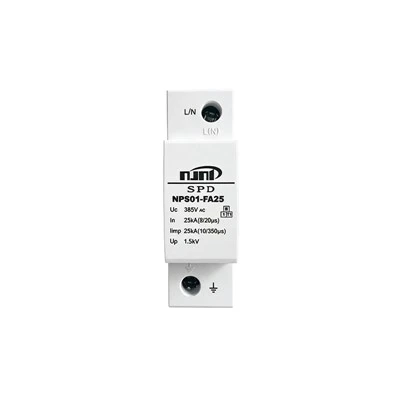
Look, I get it. Temperature affects every electronic component out there, and SPDs aren’t exempt. A device that works perfectly in a 70-degree office might act wonky when it’s 110 degrees outside or 20 degrees in a cold warehouse. If your SPD malfunctions because of bad temps, you’re looking at damaged equipment, downtime, and way more hassle than if you’d just checked the specs upfront. That’s why I’m breaking this down like I talk to my customers—no jargon, no corporate fluff, just the real deal on T1 15KA SPD temperature ranges.
First, let’s make sure we’re on the same page: what even is a T1 15KA SPD? T1 is the classification from the International Electrotechnical Commission (IEC) for Type 1 SPDs, which are designed to handle direct lightning strikes or very large surge currents that come straight from the utility grid. The 15KA is the nominal discharge current—meaning this thing can safely bleed off up to 15,000 amps of surge current (that’s way more than most residential devices, by the way) to keep your gear from taking a hit. These aren’t the little plug-in ones you use for your TV; they’re the heavy-duty ones mounted at the main electrical panel, or on the incoming line of a commercial building.
Now, the temperature range. I’ve seen a lot of misinformation online, so let’s start with the basics: every SPD has two key temperature specs: the operating temperature range (where it’s supposed to work consistently) and the extreme temperature limits (where it might survive but not do its job right). For T1 15KA SPDs, the standard operating range is usually -40°C to 85°C (that’s -40°F to 185°F for my US customers). Wait, that’s a pretty wide range, right? But there’s a catch—this is for the device itself under normal operating conditions, not when a surge hits.
Let me explain why that matters. Most people look at the -40 to 85 number and think, “Great, I can install this outdoors in Arizona or up in a Canadian warehouse, no problem.” And yeah, that’s true for most applications. But here’s the thing: when a surge hits, the SPD gets hot—really hot, almost instantly. If the ambient temperature is already pushing 85°C (like a rooftop electrical panel in the middle of July), that pre-existing heat can make the SPD’s internal components (usually metal oxide varistors, or MOVs, for T1 15KA models) work way harder than they’re designed to. So even if the device is technically within the operating range, the combined ambient + surge heat can cause it to fail prematurely, or even not discharge the surge at all.
I’ve had a customer who learned this the hard way last summer. He installed three T1 15KA SPDs on the rooftop of a retail store in Phoenix. The temps hit 110°F (around 43°C) that day, and when a minor lightning surge came through, two of the SPDs didn’t trigger. The result? The store’s POS system and refrigeration units got fried, costing him over $20k in repairs and lost sales. When we checked the specs, his device was rated for -40 to 85°C, but the rooftop was already 80°C just from the sun, so adding the surge heat put the internal temp of the SPD way above the 125°C threshold where MOVs start to break down. That’s why we always tell customers to account for both ambient temp and the heat generated during surge events.
Now, what happens if the temperature is below -40°C? Most T1 15KA SPDs lose their effectiveness when it’s too cold. MOVs become less conductive in frigid temps, so they can’t discharge the surge current properly. I once worked with a customer in northern Minnesota who installed a SPD in an unheated workshop. When a storm hit last January, the temp was -45°F (-43°C), and the SPD didn’t engage. His 3D printer was destroyed, and he told me he’d never even considered cold as a problem—he just assumed SPDs worked everywhere the same. That’s the kind of mistake we try to help people avoid.
But wait, not all T1 15KA SPDs are created equal. Some manufacturers use cheaper MOVs that have a narrower temp range—like 0°C to 40°C, which is garbage for outdoor or industrial use. That’s why when I sell these devices, I make a point to tell customers to ask for the internal component specs, not just the label on the box. The good ones use high-grade, metal-oxide varistors that can handle both extreme cold and heat, and their operating range is indeed that -40 to 85°C sweet spot.
Another thing to consider: humidity and temperature go hand in hand, but that’s a separate topic. Wait, no—actually, high humidity can impact internal temps too. If an SPD is mounted in a damp area (like a basement utility room), condensation can form, which might lower the effective operating range slightly. But for most commercial and industrial settings, as long as you’re not mounting the device in a place where temps regularly exceed 85°C or drop below -40°C, you’re good to go.
Let’s talk about how temp affects the lifespan of these devices, too. Even if an SPD still works at extreme temps, it might not last as long. Every time an SPD discharges a surge, it wears down a little. If it’s operating in a hot environment, that wear accelerates. So a T1 15KA SPD that’s used in a 70°C rooftop panel might only last 3-5 years, whereas one in a cool basement could last 10+ years. That’s something to factor into your budget—you might save a few bucks on a cheap SPD, but replacing it every 3 years isn’t worth it.
So, to circle back to the original question: what’s the proper temp range for a T1 15KA SPD to work? The short answer is: for consistent, reliable performance, keep the ambient temperature between -40°C and 85°C, and make sure that when a surge hits, the internal temperature of the device doesn’t exceed 125°C. If your application is in a place with extreme temps (like a desert rooftop or a frozen warehouse), we can also suggest heat sinks for hot areas or insulation for cold ones to keep the device within that range.
Now, I know this all sounds like a lot, but that’s what I’m here for. A lot of my customers are electricians who are busy, or facility managers who don’t have time to dig through technical specs. I don’t just sell you an SPD and send you on your way— I help you figure out where to mount it, what temp conditions you’ll be dealing with, and which model will work best for your specific space.
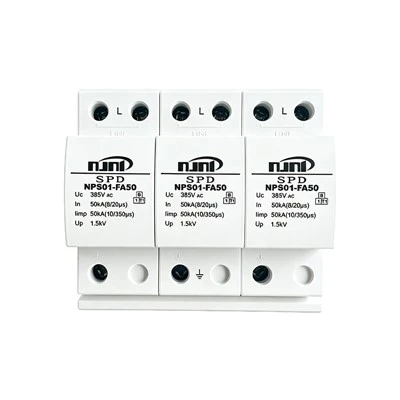
If you’re planning to install a T1 15KA SPD, or you’ve had issues with one that failed due to temp, feel free to reach out. We can talk through your setup, check the temp conditions at your site, and make sure you get the right device that will protect your equipment for years to come. No pushy sales pitches, just honest advice from someone who’s been in this game for a while.
T1+T2 12.5KA Surge Protective Device References
IEC 61643-11:2011, Low-voltage surge protective devices – Part 11: Surge protective devices connected to low-voltage power systems – Requirements and test methods
Underwriters Laboratories (UL) 1449, Standard for Safety for Surge Protective Devices
IEEE C62.41.2-2002, Guide on the Surge Environment in Low-Voltage (1000 V and Less) AC Power Circuits
Nanjing Ningpu Lightning Protection Equipment Manufacturing Co., Ltd.
As one of the most professional T1 15ka surge protective device manufacturers and suppliers in China, we’re featured by quality products and good price. Please rest assured to buy customized T1 15ka surge protective device made in China here from our factory. Also, pricelist is available.
Address: Building 1, No.20 Shengyuan Road, Lishui Economic Development Zone, Nanjing City, Jiangsu Province, China
E-mail: 3796023563@qq.com
WebSite: https://www.npspd.com/
