When a bar stool supplier, I get this question at least a dozen times a day: Are metal bar stools durable? It’s one of those things customers think they know until they dig a little deeper, and honestly, for good reason. I’ve seen everything from flimsy metal stools that broke after three months in a busy café to heavy-duty models that still look sharp after 10 years in a downtown bar. Let’s break this down not just as a seller, but as someone who’s spent years testing and supplying bar stools for all kinds of spaces—from home kitchens to high-traffic commercial venues. Bar Stool
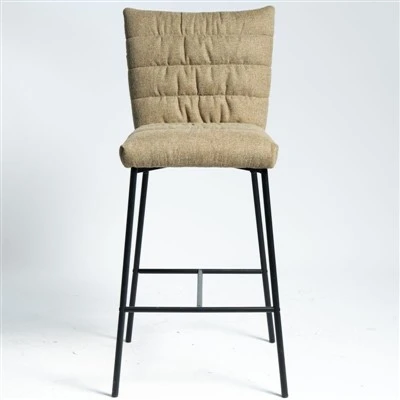
First, let’s start with what makes metal inherently durable. Unlike wood, which can crack, warp, or scratch if exposed to moisture or heavy use, metal is resistant to most of the everyday wear and tear that breaks down furniture. Think about it: you can spill a drink on a metal stool, drag it across a concrete floor, even set a stack of books on it when extra seating is needed, and it won’t show immediate damage. But not all metal is created equal. That’s where most customers go wrong—they see a metal stool and assume it’s just as tough as the next one, but there are specific metals that stand up to use way better than others.
The most common metals we work with are steel, aluminum, and iron. Steel, especially carbon steel, is the workhorse of commercial furniture. I’ve supplied steel stools to restaurants that have 500+ customers a week, and those stools still hold up because steel has a high tensile strength—it can bend and flex a little without breaking, which is perfect for bar stools that get sat on dozens of times a day. The trick with steel is the coating; if it’s left bare, it can rust, but powder-coated steel stools? They’re virtually indestructible. The powder coating is a thick, electrostatically applied finish that bonds to the metal, so it doesn’t chip easily, resists stains, and doesn’t scratch from regular use. We’ve tested a batch of powder-coated steel stools by dragging them across a rough warehouse floor, and the only mark was a tiny scuff that wiped right off with a damp cloth.
Aluminum, on the other hand, is lighter and more rust-resistant than steel, which makes it great for outdoor bar stools. But here’s the catch: aluminum is softer, so it dents more easily than steel. If you’re using stools in a backyard patio that doesn’t get heavy use, aluminum works fine, but for a sports bar where people lean heavily on the backrests or accidentally bump them with chairs, steel is the way to go. I once had a customer who bought aluminum stools for his downtown bar—within six months, half of them had dented seats from people setting down heavy beer pitchers. He swapped them for steel, and two years later, not a single dent. It’s not that aluminum isn’t durable; it’s just durable for the right use case.
Iron is the oldest of the three, often used in industrial-style bar stools. Wrought iron, specifically, is super strong, but it’s heavy and can rust if not properly sealed. We don’t supply wrought iron for commercial spaces as much anymore because of the maintenance, but for home use—where it’s not exposed to constant moisture or heavy traffic—it’s extremely durable. I have a wrought iron stool in my own kitchen that I’ve had for seven years, and it still looks the same as the day I bought it. That’s the thing about metal durability: it’s not just the metal itself, but how it’s treated.
Now, let’s talk about the parts that are actually more important than the metal material. A stool might be made of heavy steel, but if the legs are thin gauge or the footrest is welded poorly, it’ll break faster than a cheap wooden stool. We see this all the time with no-name metal stools from big-box stores—they use thin, 16-gauge steel (or even thinner) that bends under weight, and the welds are so weak that they snap after a few months. At our company, we only use 12-gauge steel for commercial stools, and we test every weld to make sure it’s solid. We even put each stool through a weight test: we load it with 500 pounds and hold it for 24 hours, and if it doesn’t bend or show any stress marks, it passes. That’s why our stools last.
Another factor is the design. A metal stool with a wide, stable base is way more durable than one with a narrow, leggy frame. A lot of cheap metal stools have four thin legs that splay out at sharp angles, so they tip easily, and over time, the stress on the leg joints weakens them. Our most durable design has a reinforced base—either a circular foot ring that connects all four legs or a cross brace between the front legs—that distributes the weight evenly. I watched a customer test this once: he sat on the edge of a cheap metal stool and it tipped over, so he tried one of ours, leaned all the way back, and it didn’t move an inch. That design choice isn’t just about comfort; it’s about durability too.
What about cleaning and maintenance? A big part of durability is how easy it is to keep the stool in good shape. Metal stools are way easier to clean than wood or fabric, which means they stay durable longer. You don’t have to use special cleaners or worry about staining—just wipe it down with a disinfectant spray and a cloth, and it’s good as new. For commercial spaces, that’s a huge plus—busy restaurants and bars can’t afford to spend hours scrubbing furniture. The powder coating we use also helps here; if a child spills juice or someone drops a ketchup bottle, it doesn’t seep into the metal, and a quick wipe takes care of it. I’ve had customers tell us that their metal stools look brand new after five years, whereas their wooden chairs have scratched and faded in half that time.
But wait—let’s be honest, metal stools aren’t perfect. If you drop a heavy object on them, they can dent, and if the coating chips, the underlying metal can rust. But compared to other materials, those are minor issues, and they’re easy to fix. A small dent in a steel stool doesn’t affect the structural integrity, and a chip in the powder coating can be touched up with a spray can of paint. Wood, on the other hand, can crack beyond repair if it’s damaged, and fabric stains are often permanent. We also see customers worry about metal being cold, but that’s a personal preference, not a durability issue—you can get stools with cushions made of vinyl or fabric, which keep the seat warm and add another layer of protection to the metal.
Now, let’s talk about real-world examples. Last year, we supplied a set of steel bar stools to a brewpub in Chicago that’s open 12 hours a day, seven days a week. They have 20 stools, and in the past, they’d go through a new set every 18 months because their old wooden stools would warp. Our stools have been there for two and a half years, and the manager told me last month that he hasn’t had to replace a single one. That’s the kind of track record that makes us confident in metal stools’ durability. Another customer, a homeowner, bought three aluminum stools for her backyard tiki bar. She lives in Florida, where it’s hot and humid, and after two years, the stools still don’t have any rust—because we used marine-grade aluminum, which is designed to resist corrosion in salt air and moisture. That’s a detail a lot of suppliers skip, but it makes all the difference for outdoor use.
So, is there a case where metal stools aren’t durable? Sure—if you buy a cheap, thin-gauge metal stool with poor construction, it’s going to break quickly. I’ve seen $50 metal stools from discount stores that collapsed when someone sat on them, and that’s not the metal’s fault—it’s the quality. That’s why as a supplier, we always tell customers to look for the right signs: check the gauge of the steel (12-gauge is ideal), look for solid welds, and make sure the base is wide enough. If a stool feels flimsy when you pick it up, it’s going to be flimsy when you use it.
Another thing to consider is warranty. A lot of reputable suppliers, like ours, offer a 5- to 10-year warranty on metal stools because we know they’re durable. If a stool has a lifetime warranty, that’s a good sign—companies don’t offer that on furniture they don’t stand behind. We even have a customer who had a stool with a loose footring after three years, and we sent a repair kit in two days, no charge. That’s the kind of support that comes with durable products.
Let’s also touch on sustainability, which ties into durability too. Metal is 100% recyclable, so when your metal stools do eventually reach the end of their life, you can melt them down and make new furniture, whereas wood or fabric waste often goes to landfills. So not only are metal stools durable while you use them, they’re also better for the environment long-term. That’s a big selling point for customers who care about sustainability, which is becoming more and more common in both home and commercial spaces.
I think the biggest misconception people have about metal stools is that they’re all the same. In reality, durability depends on four key things: the type of metal, the gauge of the material, the quality of the construction (welds, bracing), and the design. At our company, we focus on all of these, which is why our metal bar stools are a popular choice for everything from small home kitchens to large hotel bars.
If you’re in the market for bar stools and want something that will last, I’d encourage you to look beyond the price tag. A $100 metal stool might seem like a deal, but if it breaks in six months, you’ll end up spending more in the long run replacing it. Our stools start at a price that reflects the quality—thick steel, solid construction, durable coating—and that’s an investment that will pay off for years.
At the end of the day, the answer to “Are metal bar stools durable?” is a resounding yes—when they’re made well. They resist the wear and tear that damages other materials, are easy to clean and maintain, and with proper use, they’ll last a decade or more. If you’re interested in learning more about our durable metal bar stools or want to discuss what’s right for your space, feel free to reach out to us to connect for a procurement discussion.
Lounge Chairs References
- National Wood Flooring Association. (2020). Furniture Material Durability: A Comparative Analysis.
- American Society for Testing and Materials (ASTM). (2019). Standard Test Methods for Strength of Metal Furniture for Commercial Use.
- International Code Council (ICC). (2021). Commercial Furniture Durability Guidelines for Food Service Venues.
- Powder Coating Manufacturers Association. (2022). Performance Standards for Powder Coatings on Metal Furniture.
Furnishion (Tianjin) International Co., Ltd.
Furnishion (Tianjin) International Co., Ltd. is one of the most experienced bar stool manufacturers and suppliers in China. With a professional production team, we are able to meet the needs of the majority of our customers. Please feel free to wholesale high quality bar stool at competitive price from our factory.
Address: Room 2501, West Tower, Unit 1, Jinta Apartment, 162 Zhang Zizhong Road, Heping District, Tianjin, China
E-mail: export@furnishion.com
WebSite: https://www.furnishion.com/
