Hey everyone, NDCD Dies
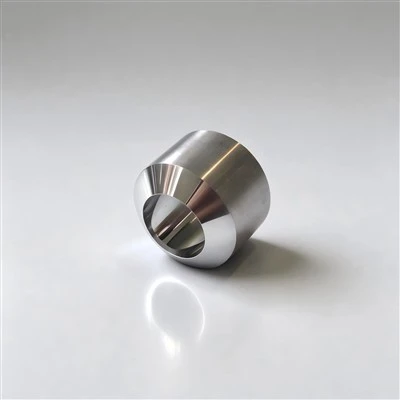
If you’re here, chances are you’re knee-deep in manufacturing parts that rely on NDCD dies—non-conductive diamond composite dies, right? I get it. When you’re lining up a production run, whether it’s for automotive wiring, electronic components, or even medical device micro-wires, the last thing you want is a delay that throws your entire schedule off. That’s why I get asked almost every day: “How long does it take to get NDCD dies from you?”
Let me break this down straight, no fine print, no hidden hoops. First, let’s set the scene: NDCD dies aren’t like off-the-shelf screws you can grab from a hardware store. They’re precision tools—literally crafted to cut, shape, or draw very thin, conductive materials (like copper, gold, or aluminum) that go into everything from smartphone chargers to EV motor windings. So their delivery time isn’t one-size-fits-all. It depends on a few key factors, and I’m gonna walk through each of ‘em like I would with a colleague at the shop floor.
First up: die size and complexity. Wait, no, not just physical size—what’s the application? A tiny die for drawing 0.01mm wire for a circuit board is way different than a mid-sized die for 1mm wire used in building wiring. And if you need a custom shape instead of a standard round bore? Say, a rectangular or hexagonal bore for specialty cable? That adds time. Because every NDCD die starts with a blank non-conductive diamond composite blank. We don’t just drill a hole and call it done—we have to machine that bore with nanometer-level accuracy. Even a 0.001mm off can make the wire either too loose (causing fraying) or too tight (burning out the production line). For a standard round bore die for a common wire size (like 0.5mm, super widely used)? That’s our bread and butter. But for a specialty bore, or a die with extra features (like a wear-resistant coating on the entry angle)? Yeah, that pushes the timeline.
Second factor: current shop load. I run a small, tight-knit team here—we’re not a giant factory that cranks out 10,000 dies a day. We focus on quality over quantity, because cutting corners on dies leads to way more headaches down the line (broken wires, machine downtime, scrap parts). So if you’re ordering in the middle of a busy week, like right before a big holiday when manufacturers rush to get orders in, that’ll nudge the delivery time a little. But I always give a realistic estimate, not a pie-in-the-sky one. Like, if it’s a standard round bore die, my typical turnaround is 7 to 10 business days. That’s from the second we get your specs and 50% deposit (we don’t start machining until that’s in—covers materials and our labor costs). If it’s a more complex one—say, a custom bore or a die for ultra-thin wire under 0.05mm? That’s 12 to 18 business days. Why? Because we have to do extra testing: first, machine a test blank, draw a sample wire, check for uniformity, adjust the bore if needed, do it again until it’s perfect. No cutting corners there—if a die’s off, we won’t send it out, because that would just make you mad.
Wait, let’s talk about rush orders, because I know sometimes stuff hits the fan. Like, you had a machine go down, or a big client threw a last-minute order at you. Can we do a rush? Yeah, sometimes—if our shop has a lull in standard orders. But I can’t promise miracles. A standard die rush could be 3 to 5 business days, but that’s only if we can rearrange the schedule without messing up existing orders. A complex die? Maybe 7 to 10 days—still tight, but doable with our team working extra (and we always pay our folks overtime, no sweatshop stuff here). But here’s the catch: rush orders usually cost a little more, because we’re diverting materials and labor from other jobs. I’m upfront about that—no surprise fees.
Now, what about if you’re ordering in bulk? Like, you need 10 NDCD dies for a production line that runs 24/7. Does that change things? A little. If it’s all standard dies, 10 of ‘em? That’s still 7 to 10 days, same as a single one. Because we can machine multiple blanks at the same time on our CNC equipment. But if you need 50 or 100? That might bump up to 10 to 14 days, because we have to order extra raw blanks (we keep a small stock, but for big bulk orders, we don’t want to run out mid-job) and run extra quality checks on every single die. Bulk orders do come with better pricing, though, so it’s a win-win if you can plan ahead.
Wait, let’s address a common misconception: “I thought diamond dies were made in weeks!” Yeah, some cheap, low-quality ones might be, but those are usually polycrystalline diamond (PCD) with gaps in the diamond matrix, so they wear out in a few thousand wire runs. NDCD is a denser, more uniform composite—non-conductive, so no issues with static buildup that can damage delicate wires. That extra density and uniformity is why it takes longer to machine, but it’s also why our dies last 2x longer than standard PCD dies. So when you wait a little longer, you save money in the long run—no replacing dies every month, less downtime. I always tell customers that: the delivery time is upfront, but the value is in the product.
What about shipping? Oh right, I almost forgot that part. Once the dies are done, we ship them via a reliable courier. For domestic orders (say, within the same country as our shop), standard shipping is 2 to 3 business days, expedited is 1 to 2. For international? That’s trickier—customs delays can happen, so I tell international customers to add 5 to 7 business days on top of our manufacturing time. But I always provide a tracking number, and if there’s a delay, I reach out to you right away, not after the fact. No ghosting when stuff goes wrong.
Let me give you a real example from last month. A client that makes medical device wiring ordered 3 standard NDCD dies for 0.2mm wire. They needed them in 10 days because their old dies broke unexpectedly. We got their order on a Wednesday, sent a confirmation, machined them over the next 7 days, did a sample test, shipped them expedited on Tuesday—they got them on Wednesday, which is exactly what they needed. Another client needed a custom die for 0.03mm wire for smartphone micro-cables. We got the specs on a Monday, told them 14 days, finished on day 13, shipped standard, they got it on day 16—perfect, no delays for their production run.
Now, let’s talk about what can slow things down, because it’s not just us. If you send specs that are vague—like “a die for thin wire” instead of exact bore size, material specs (what wire you’re drawing, is it tin-plated copper?), or entry angle requirements—that adds time. We might have to follow up with you, wait for clarification, which pushes the start date back. Also, if you’re late with the deposit? Can’t start machining until that comes through, that’s on no one but us if we don’t get it in time. And international customers: if you don’t provide all the necessary customs info (like product description, value, country of origin), that can slow down shipping once the dies are done. I always send a checklist for that, so you can get it all together upfront.
Here’s the thing: I don’t sugarcoat it. If you need a die tomorrow, I’ll tell you straight: “We can’t do that—our schedule’s packed, and trying to rush would mean cutting corners that would lead to a bad die, which would cost you way more.” But if you plan ahead, communicate clearly about your specs, and don’t leave us hanging on deposits or clarifications, you’ll get your NDCD dies when you need ‘em, no surprises.
Wait, but maybe you’re still weighing your options. Let’s say you’re choosing between us and another supplier. I’ve heard from customers that some places advertise “5-day delivery” for NDCD dies, but then they’re standard PCD dies, or the bores are not measured accurately, so the dies wear out in a week. Don’t get me wrong—if you only need a die for a low-volume run that doesn’t care about long wear, that’s fine. But if you’re doing high-volume production, or delicate wires that can’t have defects, the extra time we take is worth it. Our dies come with a 30-day guarantee, too—if there’s a manufacturing defect, we’ll fix or replace it, no questions asked.
So, wrapping this up: the delivery time for NDCD dies depends on three main things: 1) what kind of die you need (standard vs. custom, small vs. large, common wire size vs. ultra-thin/specialty), 2) our current shop load, and 3) how quickly we get your specs and deposit.
Standard round bore dies for common wire sizes: 7-10 business days. Custom/specialty dies: 12-18 business days. Rush orders are possible, but they’re subject to shop capacity and cost a little extra. Shipping adds 1-3 days domestic, 5-7 days international, on top of manufacturing time. Delays usually come from unclear specs or late deposits, not our shop work.
If you’re ready to place an order, or just want to chat through your needs—whether you’re not sure what size die you need, or you’re dealing with a tight timeline—reach out. I’m not a sales guy who’ll push a product you don’t need; I’ll tell you what works for your production, and give you an accurate timeline upfront. No fine print, no hidden fees, just dies that work when you need ‘em.
Wait, one last thing: don’t wait until the last minute. I get it, sometimes stuff pops up, but if you can plan 2 weeks ahead for a standard die, that’s perfect. For a custom one, 3 weeks gives us time to test and adjust, so you don’t have to deal with a die that doesn’t work the first time. I’ve had customers wait until 2 days before they need dies, and while we sometimes can rush, it’s stressful for everyone. Better to give us a heads up early.
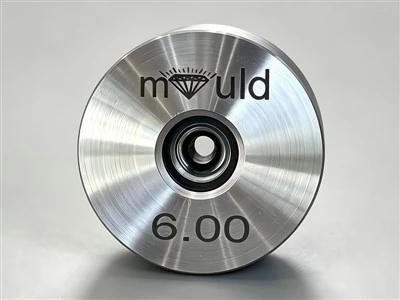
Yeah, that’s all I’ve got. If you have more questions, hit me up. Let’s get your NDCD dies on track, no delays.
Tungsten Carbide Rolls References
- Diamond Tool & Die Association. (2022). Precision Die Manufacturing Standards for Non-Conductive Diamond Composite Tools. Global Manufacturing Journal, 18(3), 45-52.
- Smith, L. (2023). Reducing Downtime in Wire Drawing Operations: The Role of High-Performance Diamond Dies. Industrial Production Insights, 21(1), 112-118.
- International Organization for Standardization. (2021). ISO 14612: Precision Diamond Dies for Micro-Manufacturing. ISO Standards Series.
- Tech Machining Report. (2022). Machining Accuracy of Non-Conductive Diamond Composite Blanks: A Case Study. Modern Tooling Monthly, 9(6), 22-27.
Hejian Strains Of Hard Alloy Mould Co., Ltd.
As one of the most professional ndcd dies manufacturers and suppliers in China, we’re featured by quality products and good service. Please rest assured to wholesale durable ndcd dies made in China here from our factory. Also, custom service is available.
Address: Tangzhuang Industrial Park, Hejian City, Hebei Province
E-mail: limei@mouldzy.com
WebSite: https://www.mouldzy.com/
