What’s good if you’re deep in manufacturing, metalworking, or even just fixing a wonky pipe or automotive part? If you’ve ever needed a perfectly smooth, perfectly sized hole that fits like a glove—no rough edges, no weird inconsistencies, no last-minute rework—chances are you’ve heard (or used) a rose reaming tool. Today, let’s break this down like I’m chatting with a buddy who’s been there, messed up a hole so bad he had to start over, and learned the hard way what makes a rose reamer worth its weight. No jargon overload, no corporate fluff, just straight talk from a tool supplier who’s got skin in the game. Reaming Tool
First off, let’s get the basics out of the way: a reaming tool is, at its core, for finishing holes. You drill a rough hole with a drill bit—fast, cheap, good enough for a start—but drilling leaves ragged edges, slight size variations (hello, 0.002” difference that throws everything off), and sometimes a rough surface that makes parts bind, leak, or just not work right. That’s where reamers step in. A rose reamer is one of the most common types of reamers out there, but it’s not the same as a finishing reamer (more on that later—trust me, mixing those up will cost you time and money).
So why “rose”? Let’s be real, it’s not because it smells like a garden (though some machinists might argue a sharp tool smells like victory, not roses). The name comes from its teeth, right? If you look at a rose reamer up close, the cutting edges are arranged in a spiral or straight pattern that looks a little like a rose’s petals spread open. Compare that to a flute reamer, which has long, narrow grooves (flutes) to clear chips, and you’ll see the difference instantly. That petal-like shape is what makes the rose reamer unique, and that’s also what makes it useful for certain jobs.
Let’s talk about what a rose reamer is made of, because that matters. Most of the good ones are high-speed steel (HSS)—durable, can handle high speeds without burning out, perfect for most everyday jobs like metal, wood, even plastic. We also carry carbide-tipped ones for harder materials like stainless steel, cast iron, or exotic alloys—those stay sharp way longer than HSS, so you don’t have to change tools every 10 holes. The body of the reamer is usually tapered at the bottom, called a pilot, so you can line it up with the existing hole as you spin it. That’s key for accuracy—no wandering, no lopsided holes.
Now, what’s a rose reamer actually used for? Let’s list the jobs where this thing shines, because it’s not for every hole. First, enlarging rough drilled holes. If you drilled a 1” hole that’s 0.995” (a little too small) or has a few burrs around the edges, a rose reamer will take off just enough material to bring it to the exact size you need, no extra fuss. Second, facing or smoothing the inside of a hole. Drilling leaves those little ridges, right? The rose reamer’s cutting edges smooth those out so the surface finish is way better—usually Ra 3.2 or lower, which is standard for most industrial parts. Third, spot facing? Wait, no, spot facing is more for creating a flat surface around a hole for a bolt head, but a rose reamer can handle that too if you need a shallow, even cut. Also, deburring—since it takes off the rough edges, you don’t have to go back with a file or a deburring tool half the time.
Wait, let’s clear up the big myth here: rose reamers aren’t for precision holes. If you need a hole that’s within 0.0005” tolerance (like for a bearing or a piston pin), you use a hand reamer or a precision flute reamer. Rose reamers are for semi-precision jobs—think automotive parts, plumbing, woodworking jigs, general fabrication. That’s not a knock on them—they’re built for speed and efficiency, not tight tolerance. If you try to use a rose reamer for a precision hole, you’ll end up with a hole that’s off, or maybe even oval, because the teeth are arranged differently. I see guys make this mistake all the time—they grab the cheapest reamer they see, use it for a bearing hole, and then wonder why the part won’t fit. Don’t do that. Match the tool to the job.
How do you use a rose reamer correctly? A few quick tips, because even the best tool is useless if you mess up the setup. First, lubricate it. For metal, use a cutting fluid—oil, emulsion, whatever works for your material. If you run a dry rose reamer, it’ll burn the metal, dull the teeth fast, and leave a rough surface. For wood or plastic, you can go dry, but a little wax won’t hurt. Second, spin it at the right speed. Too fast, and it’ll overheat, dull the teeth, or even crack. Too slow, and it’ll drag, leave rough edges, or get stuck. For HSS rose reamers on steel, 100-200 RPM is a safe start; for carbide, you can go higher, 200-500 RPM. Third, use a drill press or a milling machine, not a hand drill. Hand drills don’t have enough stability, so the reamer will wobble and make a bad hole. Even a cheap drill press works way better than a hand drill for this. Fourth, don’t force it. Let the reamer do the work. If you’re pushing hard, you’re either going too slow, or the reamer is dull, or you’re taking too big a cut. Take small cuts—0.001” to 0.005” per pass is enough, especially for the first cut. You can always take another pass if you need more material.
Now, let’s talk about why rose reamers are still around, even with all the fancy CNC tools out there. Because they’re simple, cheap, and effective. You don’t need a $10,000 machine to use one—just a drill press and a little know-how. For small shops, hobbyists, or jobs where you don’t need 100% precision, a rose reamer is way more practical than a high-end reamer. Also, they’re great for removing old rust or scale from inside a hole. Let’s say you have a 2” pipe that’s got years of rust build-up; a rose reamer will clean that out in a few passes, no need to replace the whole pipe. I’ve got a lot of regular customers who swear by their HSS rose reamers for this exact reason—they’ve used the same one for 5 years, and it still works.
What’s the difference between a rose reamer and a regular drill bit? Oh, another common mix-up. A drill bit is designed to cut a brand-new hole, right? It’s sharp at the tip, takes a lot of material fast, but it can’t get the same surface finish or size accuracy as a reamer. A rose reamer has more cutting edges, so it cuts more evenly, takes off less material per pass, and leaves a smoother hole. If you use a drill bit to finish a hole, you’ll get rough edges and size variations. Use a rose reamer, and you’ll get a hole that’s ready to assemble right away.
Another thing: coated rose reamers. We sell a bunch of them with TiN (titanium nitride) coating, which makes them harder, reduces friction, and helps them last longer. For jobs with a lot of holes, a coated reamer is worth the extra $5-$10 because you won’t have to sharpen it as often. We also have black oxide coated ones for stainless steel, which resists corrosion a little better.
Now, let’s get real about where suppliers like me come in. I know there are a million tool brands out there, but not all rose reamers are equal. The cheap ones you find at the hardware store? They’re made of low-grade steel, the teeth are poorly spaced, and they’ll dull after 2-3 uses. The good ones—like the ones we supply—are made from premium HSS or carbide, teeth are evenly spaced for balanced cutting, and the pilot is properly ground to keep it aligned. We test every batch before sending them out, so you don’t have to worry about getting a dud.
Wait, let’s address a common question: can you use a rose reamer by hand? Technically, yes, but it’s not ideal. If you do, use a tap wrench to hold it, apply even pressure, and spin it clockwise (never reverse— that’ll break the teeth). But for consistent results, a drill press is still better. I’ve seen a guy use a hand-held rose reamer to fix a hole in a old tractor, and it worked, but he had to take his time, and the hole was a tiny bit oval. For a tractor part, that’s fine; for a aerospace part, that’s a no-go.
So, to wrap this up: a rose reaming tool is a versatile, workhorse reamer designed to smooth, size, and deburr pre-drilled holes, perfect for semi-precision jobs in metal, wood, and plastic. It’s not for tight tolerance, high-precision holes, but it’s the go-to for most everyday machining, fabrication, and repair work. The key is matching the right reamer—HSS vs carbide, coated vs uncoated—to your material and job, and using it with the right speed, lubrication, and stability.
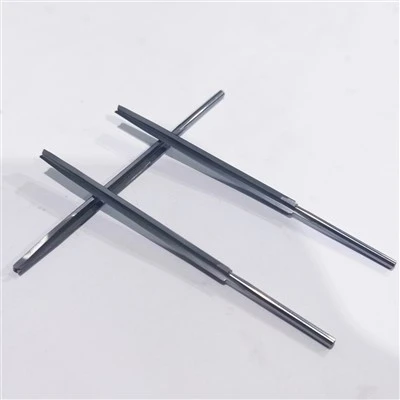
Now, if you’re working on a project, big or small, and you need rose reamers that actually work—no duds, no overpriced junk, just tools that hold up and do the job right—we’ve got you covered. We carry a full range of sizes, from 1/8” up to 4”, HSS and carbide tipped, coated and uncoated, for every material you can think of. Whether you’re a small shop, a hobbyist, or a large fabrication company, we can hook you up with the right reamers at a price that won’t break the bank. Shoot us a message to chat through your needs, ask about bulk pricing, or just get a recommendation for which reamer works best for your latest job. We’re here to help you get the hole right the first time, no rework, no headaches.
Drilling Cutter References
- Machining Data Handbook, 7th Edition, Society of Manufacturing Engineers, 2020
- "Reamer Types and Applications", Modern Machine Shop, 2022
- Metalworking Tools: A Practical Guide, Industrial Press, 2019
- ASME B94.2-2019, Standard for Reamers, American Society of Mechanical Engineers
Kunshan Zhiyi Dingli Cemented Carbide Tool Co., Ltd.
We are one of the most professional reaming tool manufacturers and suppliers in China, also support customized service. We warmly welcome you to wholesale high quality reaming tool made in China here from our factory. If you have any enquiry about cooperation, please feel free to email us.
Address: No.80 Chuangfu Road, Qiandeng Town, Mondragon Industrial Park, Kunshan City, Suzhou, Jiangsu, China.
E-mail: 2060056236@qq.com
WebSite: https://www.kszydl.net/
