If you’ve ever found yourself staring at a worn, mismatched, or lost key for a lock cylinder—whether it’s on your front door, a storage unit, or a commercial cabinet—you know the frustration of being locked out or stuck with a cylinder that doesn’t work for your needs. As a lock cylinder supplier, I field this question every week: “Can I rekey a lock cylinder without the original key?” The short answer is yes, but it’s not as simple as turning a screwdriver. Rekeying is a precise process that requires the right tools, a basic understanding of how lock cylinders work, and a careful approach to avoid damaging the cylinder or the lock itself. Before we dive in, let’s talk about why you might need to do this: maybe you moved into a new home, lost track of keys for a storage unit, or want to match multiple cylinders to the same key for convenience. Whatever the reason, doing this correctly saves you the cost of replacing an entire lock, and it’s a skill that anyone with a little patience can master. Lock Cylinder
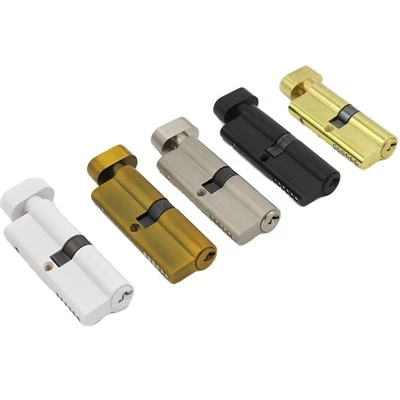
First, let’s break down how a standard pin tumbler lock cylinder works, because that’s the most common type for residential and commercial applications. Inside the cylinder, there are a series of small metal pins: top pins and key pins, alternating in length. When you insert the correct key, the cuts on the key align each pair of pins at the shear line—this is the gap between the outer shell of the cylinder and the inner core. When the pins are at the shear line, the core can turn, unlocking the lock. The goal of rekeying is to change the length of these pin pairs so that a new key will align them at the shear line, while rendering the old key useless. If you don’t have the original key, you’ll need to identify the pin sizes that correspond to a new key, and that’s where the process starts.
One of the most reliable methods to rekey a cylinder without the original key is using a pin chart or a key decoding tool. This is especially useful if you have a standard pin tumbler cylinder from a major brand—Schlage, Kwikset, or Yale, for example. Most of these brands publish pin size charts that map to their key codes, and many key decoding tools allow you to pull the pin lengths directly from the cylinder by inserting a key decoder into the cylinder’s keyway. Wait, you might be wondering: how do you do that without the original key? Let’s walk through the steps. First, you’ll need to remove the cylinder from the lock. To do this, look for a small retention screw or pin on the side of the lock (most are located on the edge of the door or frame, near where the cylinder meets the lock). Use a small Allen wrench or a screwdriver to loosen that, then pull the cylinder straight out of the lock housing. Once the cylinder is out, you’ll have access to the keyway and the pins inside.
Next, use a key decoder tool—these are small, inexpensive tools that fit into the keyway and have tiny probes that press against each pin. Turn the decoder gently until you feel it catch on each pin, and it will display the size of each pin pair. This works because the pins are set in the cylinder in a specific order, and the decoder reads the height of each pin to tell you what size replacement pins you need. Once you have that pin size data, you can either use the brand’s pin chart to match it to a new key code, or select new pins of the correct lengths to create a custom key. This method is accurate for standard cylinders, but it does require a bit of practice to get the feel of turning the decoder without jostling the pins out of place.
Another method that works well, especially for cylinders where decoding tools aren’t available, is picking the cylinder first, then using the picked key as a template. Lock picking is a skill that takes some practice, but it’s accessible for beginners with the right set of tools. To pick a cylinder without the original key, you’ll need a set of lock picks (a hook pick and a rake pick work well for beginners) and a tension wrench. Insert the tension wrench into the bottom of the keyway, apply gentle, consistent pressure in the direction you want the key to turn (usually clockwise for most standard locks). Then, gently insert the pick into the top of the keyway and move it up and down to lift each pin until you hear or feel each pin click into place. Once all pins are set, the core will turn slightly—this is the “set” position, and it tells you that the pin heights are matched to the tension you applied.
Once you have the core turning, you can pull the core out of the cylinder shell (most pin tumbler cylinders have a small clip that holds the core in, or you can push out the pin retainer with a small screwdriver) and empty all the old pins from the core. Now you have a clear core, and you can use a pin gauge to measure the depth of each pin slot—this will give you the exact size of pins you need to create a new key that will work with the set core. Insert new pins into the core, reassemble the cylinder, and test turning it with a trial key. If it doesn’t turn smoothly, adjust the pin sizes slightly until it works. This method is a bit more hands-on than decoding, but it’s great for cylinders where you don’t have brand-specific tools, and it’s a skill that comes in handy for all sorts of lock-related projects.
A common mistake people make when rekeying without the original key is using the wrong pin sizes, which leads to a stiff key, a lock that jams, or a key that doesn’t turn at all. That’s why having a pin gauge is so important—these small tools let you measure each pin slot to the nearest thousandth of an inch, so you get a perfect fit. As a lock cylinder supplier, I always recommend that our customers invest in a basic rekeying kit that includes pin gauges, a set of replacement pins, a retention tool, and a decoder. These kits are affordable, and they work for most standard residential cylinders. For commercial cylinders, which often have higher security, you might need a bit more specialized tools, but the core process is the same: remove the cylinder, identify the pin sizes, replace the pins, and test.
It’s also important to note that rekeying without the original key is different from cutting a key for a lock you don’t have a code for. When you have the original key, you just take it to a hardware store and get a duplicate, but when you don’t, you’re essentially building a new key from scratch. That means you have to pay attention to the order of the pins—each cylinder has a specific pin sequence, and mixing them up will render the lock unusable. Take your time when removing the pins: lay them out in the order they came out, so you don’t have to guess where each one goes. This is a small step, but it’s one of the most critical for getting the process right.
If you’re rekeying a cylinder for a commercial space, there’s an added layer of security to consider. Many business owners want multiple locks to work with the same key, so they can use one key for their front door, storage cabinets, and office doors. Rekeying without the original key is perfect for this, because you can set all the cylinders to the same pin sequence, creating a master key system without needing the original keys for each lock. As a lock cylinder supplier, we work with a lot of small business owners who need these custom master key setups, and the rekeying process we recommend is exactly what I’ve outlined here—careful pin identification, consistent pressure when picking or decoding, and precise pin replacement.
Now, let’s talk about when rekeying without the original key isn’t the best idea. If your cylinder is old, worn, or damaged, rekeying might not work—broken pins or a warped cylinder shell can make it impossible to get a smooth fit. In that case, replacing the entire cylinder is a better option, and it’s often cheaper than dealing with a lock that will jam in a few months. Also, if you’re not comfortable working with small tools or have never tried lock picking before, it’s worth practicing on an old, unused cylinder first to get the feel for it. There’s no shame in starting slow—learning to rekey a lock takes patience, and rushing will only lead to mistakes.
I’ve seen too many people try to rekey a cylinder without the right tools and end up damaging it, which means they have to buy a new cylinder anyway. That’s why as a lock cylinder supplier, I always advise investing in a quality rekeying kit and taking the time to follow the steps carefully. The process isn’t complicated, but it requires attention to detail. When done correctly, rekeying a cylinder without the original key saves you money, reduces the number of keys you have to carry, and gives you peace of mind that only people with the new key can access the space.
If you’re working on a large project—like rekeying an entire office building or an apartment complex—you might want to work with a professional, but for most residential or small commercial uses, this is a process you can do yourself. At the end of the day, the key is to take it step by step, use the right tools, and don’t be afraid to ask for help if you run into a problem.

If you have questions about rekeying lock cylinders, need replacement pins, or want to discuss custom key systems for your property, our team is here to help. We work with residential homeowners, small business owners, and commercial property managers to provide quality lock cylinders and rekeying resources that make your lock-related projects easy and affordable. Reach out to our team to learn more about our products and how we can support your needs.
Magnetic Lock Body References:
- "Locksmithing: Principles and Practice." Associated Locksmiths of America, 2019.
- "Standard Pin Tumbler Lock Rekeying Procedures." Kwikset Corporation, 2021.
- "High-Security Lock Cylinder Basics." Schlage Lock Company, 2020.
- "Key Decoding and Pin Size Measurement for Residential Locks." Yale Home Security, 2018.
Jiangsu Wenzhong Lock Industry Co., Ltd.
As one of the most experienced lock cylinder manufacturers and suppliers in China, we also support customized service. We warmly welcome you to wholesale bulk cheap lock cylinder in stock here from our factory. If you have any enquiry about pricelist, please feel free to email us.
Address: Xiaoliang Industrial Park, Danyang City, Jiangsu Province
E-mail: Rongoo7@163.com
WebSite: https://www.wenzhonglocks.com/
