If you’ve ever watched a pair of metal wires or bars fused together with no visible filler material, that’s resistance butt welding—one of the most efficient, cost-effective ways to join conductive metals for everything from automotive frame components to industrial fencing. As a supplier of resistance butt welding machines, I get dozens of calls and messages every week from fabricators, welders, and even new engineering teams asking the same core question: What is the actual temperature during this process? It’s not a trivial question, either. Too little heat, and the joint is weak, prone to cracking or breaking under stress. Too much heat, and you warp the base material, burn through thinner stock, or waste energy on unnecessary heat input. After nearly a decade working with welders testing machines, troubleshooting joints, and refining processes for clients across industries, I can tell you the answer isn’t a single number. It’s a range, shaped by a dozen factors that make resistance butt welding both an art and a precise science. Resistance Butt Welding Machines
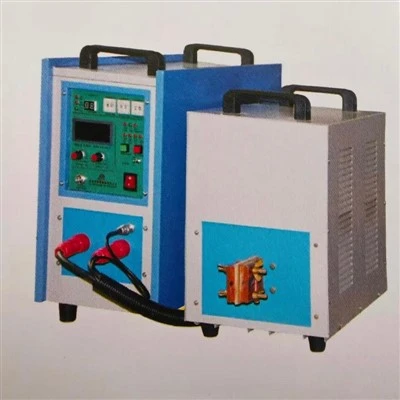
Let’s start with the basics of how resistance butt welding works, because the temperature can’t be separated from the process itself. When you run a strong, controlled electric current through two clamped metal workpieces that are pressed firmly together, the electrical resistance of the metals, plus a small amount of contact resistance at the interface where the two pieces meet, generates heat. No external torch or filler—just the metal’s own resistance turning electricity into heat. This heat is concentrated almost entirely at the joint interface, which is why the surrounding material stays mostly cool (a huge benefit over processes like arc welding that heat a much wider area). Once the interface reaches the right temperature, you apply a sudden, controlled force (called upset force) to push the two pieces together, squeezing out any impurities at the joint and fusing the solid metal grains together. That’s the key: resistance butt welding works at the temperature where the metal at the joint is neither fully liquid (which would create porosity and weak spots) nor cold solid (which would leave a cold, brittle weld). That’s why most people in the trade refer to this as the “plastic temperature range” for the metal in question.
So, what numbers are we talking about? Let’s break it down by common metals, because that’s the biggest variable. For carbon steels—the most common material for resistance butt welding in construction, automotive parts, and pipe fabrication—the plastic temperature range is roughly 1,100°C to 1,400°C (2,012°F to 2,552°F). Wait, that’s way lower than the melting point of carbon steel, which is around 1,538°C (2,800°F). That makes sense: once metal hits melting point, it turns liquid, and when you squeeze it, molten metal can get pushed out as flash, leaving voids in the joint. Working in the plastic range means the metal is soft enough to deform, flow, and fuse, but still solid enough to retain its structure. For thinner carbon steel stock—say, 1mm to 3mm used for wire or fasteners—we tend to run at the lower end of that range, around 1,100°C to 1,250°C, because thinner material can’t handle as much heat without burning through at the edges. For thicker carbon steel bars, often 10mm to 50mm used for structural components, we lean toward 1,250°C to 1,400°C to ensure the heat penetrates all the way through the joint, not just the surface.
Now move to aluminum, which is another super common metal for butt welding—think wiring harnesses, lightweight automotive parts, or industrial hardware. Aluminum has a lower melting point (around 660°C, or 1,220°F) and a much lower plastic temperature range, typically 500°C to 650°C (932°F to 1,202°F). That’s a critical distinction, because aluminum is way more sensitive to overheating than carbon steel. Too much heat, and aluminum will oxidize quickly, forming a brittle layer at the joint that ruins the weld, or even turn liquid too easily. That’s why when we supply our machines for aluminum welding, we program the current to ramp up slowly, not spike suddenly, to keep the temperature right in that narrow sweet spot. Copper, used for electrical bus bars, wiring, and heat exchangers, has a melting point around 1,085°C (1,985°F), so its plastic temperature range runs from 800°C to 1,050°C (1,472°F to 1,922°F). Again, lower than its melting point, and we have to adjust for copper’s high electrical conductivity—since it carries current so well, it takes a bit more precise control of the welding current to keep the joint temperature from dropping too fast before upset.
Wait a second—what about stainless steel? Stainless is trickier because of its alloy content, right? Austenitic stainless (the most common type used for kitchenware, industrial piping) has a plastic range of roughly 1,200°C to 1,400°C (2,192°F to 2,552°F), similar to carbon steel, but ferritic stainless tends to run a bit lower, around 1,100°C to 1,300°C, and martensitic stainless is even more narrow, just 1,050°C to 1,200°C. The alloying elements in stainless—chromium, nickel, manganese—change how the metal flows when it’s hot, so we have to tweak the temperature (and the upset force) to match. For example, martensitic stainless hardens quickly when it cools, so if we let the joint temperature drop too fast after welding, we get a brittle joint that can crack. That’s why our machines have precise cooling controls built in, not just heat controls.
I know what a lot of welders are thinking right now: “Wait, how do I actually measure this temperature? I don’t have a fancy pyrometer hooked up to my welder.” That’s a fair point, and for decades, welders relied on visual cues to judge the temperature of the joint, since real-time temperature measurement is often impractical on a production floor. The color of the hot metal at the interface is the old-school guide, and it’s surprisingly accurate when you know what to look for. Let me tell you, when I was training as a welder early in my career, my old foreman would slap my hand away from a joint if the metal glowed bright yellow-orange—he said that’s a sign it’s too close to melting, and we’d get flash and weak welds. The right color for most carbon steel is a dull cherry red to a bright orange-red, which lines up perfectly with the 1,100°C to 1,400°C range I mentioned earlier. For aluminum, the correct color is a pale, warm pink, not bright orange, which matches its lower plastic range. The shiny, silvery glow of aluminum when it gets too hot is your sign to back off the current.
But here’s the thing about working with a resistance butt welding machine: the visual cues are a starting point, but they’re not consistent. Thinner metal will glow brighter at the same temperature than thicker metal, ambient temperature (like a cold workshop in winter vs. a hot one in summer) changes how fast heat dissipates, and even minor surface contamination on the workpiece can throw off the heat balance. That’s why as a machine supplier, we don’t just sell equipment—we sell the data to make that temperature control reliable. Our machines use real-time current and voltage sensors to calculate the exact heat input at the joint, not just the total power put through the whole workpiece. For example, a 10mm carbon steel bar needs a specific current and time to hit 1,300°C, while a 2mm wire needs a much shorter current pulse at a lower amperage to hit 1,200°C without burning through. We program those parameters into our machines as standard presets for common materials and sizes, but we also work with clients to custom-tune those presets for their specific parts, because no two fabrication jobs are identical.
I’ve seen what happens when temperature is off, first-hand. Early in my career, I worked with a small automotive shop that was welding axle shafts for ATVs. They were using a generic resistance butt welder, and their welds were failing inspection at a rate of 12%. When I tested their process, I found their current was set too high, pushing the joint temperature up to nearly 1,600°C—way above the melting point of the carbon steel. The result was liquid metal inside the joint, which created tiny voids that would grow as the ATV was ridden, leading to cracks and breaks. We adjusted their machine to lower the current slightly, shorten the welding time, and tweak the upset force to match the correct plastic temperature range for that axle steel, and their failure rate dropped to less than 1% within a week. That’s the impact getting that temperature right has on a business—no rework, no scrap parts, no lost revenue.
Another example: a client who makes aluminum electrical bus bars. They were using a different brand of welder that didn’t have precise temperature control, so they were getting inconsistent welds that would either be too weak (too little heat) or full of oxide (too much heat). When they switched to our machines, which have closed-loop temperature feedback, they were able to keep the joint consistently at 580°C, right in the middle of aluminum’s plastic range. Their weld strength improved by 18%, and they cut their scrap rate by 22% in the first month. That’s why temperature isn’t just a technical detail—it’s a bottom-line issue for every resistance butt welding job.
Wait, let’s address a common myth I hear all the time: “Higher temperature always means a stronger weld.” No, that’s not true. Weld strength depends on the metal grains fusing together uniformly across the joint, not how hot the metal gets. If you go above the plastic range, you get liquid metal, which has lower grain cohesion, and you end up with a joint that’s weaker than the base metal. If you go below the plastic range, the grains don’t bond properly, so you get a cold weld that will snap at a light tug. The sweet spot is exactly that range where the metal is soft enough to deform and flow under pressure, but solid enough to maintain its material properties. That’s why resistance butt welding is so unique among welding processes—it’s one of the few that joins metal without ever bringing it to a full melt.
Now, I want to make sure this is practical for anyone reading this who’s working with resistance butt welding. If you’re troubleshooting your own process, here’s a quick checklist to verify your temperature is on target: first, check the color of the joint when you apply upset force. For carbon steel, it should be a consistent orange-red, no bright yellow glares (that’s overheating) or dull dark red (that’s underheating). For aluminum, it should be a pale pink, no bright orange (overheating) or almost gray (underheating). Second, test a small sample joint: break it apart and look at the cross-section. A good weld will have a smooth, uniform grain structure across the joint, with no voids or oxide layers. A bad weld will have gaps, burnt edges, or a brittle, crumbly look. Third, keep records of your current, time, and force settings for each job—this is how you build a repeatable process, not a guess.
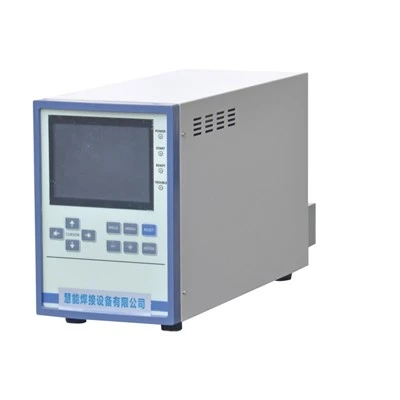
As a resistance butt welding machine supplier, my job isn’t just to sell you equipment. It’s to make sure that equipment works for your specific needs, which means getting that temperature right every time. Whether you’re welding thin aluminum wire for electronics, thick carbon steel bars for construction, or stainless steel parts for medical equipment, the temperature at the joint is the single most important variable in getting a strong, consistent, cost-effective weld. Too many fabricators settle for generic settings or old visual cues that don’t account for modern materials or tight production schedules, leading to rework, scrap, and lost time.
Resistance Butt Welding Machines If you’re tired of inconsistent welds, high scrap rates, or machines that can’t keep up with your production demands, I’d encourage you to reach out and connect. We can talk through your specific welding applications, walk through how our machines’ temperature control systems work, and help you find the right setup for your business. No generic solutions, no one-size-fits-all presets—just tailored advice and equipment that helps you get that critical joint temperature right, every single time. Together, we can turn resistance butt welding from a process that feels like guesswork into a reliable, efficient part of your production line.
References
- DIN EN ISO 14322: Resistance Butt Welding of Weldable Metals – Process and Quality Requirements
- Welding Handbook, Volume 4: Welding Processes, American Welding Society, 2018
- Kou, S.: Welding Processes and Technology, CRC Press, 2003
- ASTM E1409: Standard Test Method for Hot Tensile Strength of Metals at Elevated Temperatures
Dongguan Huineng Welding Equipment Co., Ltd.
We are one of the most experienced resistance butt welding machines manufacturers and suppliers in China. With a professional production team, we offer a wide range of products with superior quality. Please feel free to buy customized resistance butt welding machines at competitive price from our factory.
Address: 530 Guantai Road, Xitou Village, Houjie Town, Dongguan City, Guangdong Province
E-mail: fengshanggang75@126.com
WebSite: https://www.huinengwelder.com/
