If you’ve ever picked up a smooth, shatter-resistant lotion bottle that doesn’t retain leftover scents or chemicals, chances are it’s made from PETG—short for polyethylene terephthalate glycol-modified. As a supplier of PETG lotion bottles, I get asked this question all the time: what actually goes into turning a raw resin pellet into the sleek, functional bottle you see on shelves? It’s not just melting plastic and pouring it into a mold; it’s a precise, multi-step process that balances material science, quality control, and the small details that matter for your customers’ daily routines. Let me walk you through it, from the moment our raw materials arrive at our warehouse to the second a finished bottle is ready to ship. PETG Lotion Bottle

First, let’s start with why PETG is the go-to for lotion bottles, because that sets the stage for why every step of the process matters so much. Unlike regular PET (used for soda bottles), PETG has a glycol modification that makes it less brittle, clearer, and resistant to the chemicals found in lotions, serums, and body oils. It doesn’t leave that weird plastic aftertaste or break if it gets knocked off a bathroom counter—two huge wins for skincare and personal care brands that need their packaging to perform as well as the product inside it. But before we even touch a machine, we have to make sure we’re using the right raw PETG resin. We source our resin from trusted suppliers that follow strict global standards, and every batch gets tested for clarity, moisture content, and molecular weight. Moisture is a big enemy here; if resin absorbs too much water, it can cause bubbles or weak spots in the finished bottle. That’s why we store our pellets in climate-controlled silos, kept at a constant low humidity, until we’re ready to process them.
The first actual manufacturing step is extrusion, specifically extrusion blow molding—this is the core of making PETG bottles. Wait, why not injection molding? For small, hollow containers like lotion bottles, extrusion blow molding is more cost-effective for high volume, which is what most brands need. Here’s how it works: we take the dried PETG pellets and feed them into an extruder machine. The extruder is a big, heated barrel with a rotating screw inside it. As the screw turns, it pushes the pellets forward, and the heat from the barrel (and friction from the screw) melts the pellets into a thick, syrupy, uniform liquid. We carefully control the temperature here—usually between 230°C and 250°C—because too hot and the resin breaks down, releasing unwanted fumes that can contaminate the bottle; too cold and the melt is too thick to flow evenly, leading to lopsided bottles.
Once the resin is fully melted, it’s pushed through a die at the end of the extruder that shapes it into a long, hollow tube called a parison. Think of the parison like a hot, plastic toothpaste tube, only much bigger and softer. The parison is gravity-fed downward, and here’s where our first quality check happens: operators visually inspect the parison to make sure it’s uniform in thickness all the way around. If one side is thinner than the other, the finished bottle will be weak there, prone to cracking or leaking, which is a non-starter for lotion bottles that hold viscous, often liquid products.
Right after the parison is formed, we clamp a mold around it. The mold is made of two halves, precision-cut to the exact shape of our lotion bottles—usually a sleek cylinder, sometimes with a slight curve for grip, and a threaded neck to fit a pump or cap. As soon as the mold is closed, we inject compressed air into the parison through a needle at the top. This air pressure pushes the hot plastic outward, stretching it to press firmly against the inside walls of the cold mold. The mold is cooled with water or air to make the plastic solidify quickly, usually in just a few seconds. That’s when the bottle takes its final shape—no more lopsidedness, no more uneven walls.
Wait, but what about the neck of the bottle? That’s a critical part, because it has to be precise enough to fit a standard pump or cap. If the threads are even slightly off, the pump will leak or not screw on at all. We use a process called neck finishing to make sure that’s perfect. Right after the bottle is removed from the blow mold, we trim any excess plastic from the neck (called the flash) and then thread it. Some of our bottles have an additional step here: we do a cool treatment on the neck to harden it, making the threads even more durable so they don’t strip during packaging or use.
Now, the bottle is formed, but it’s not quite ready yet. PETG is naturally clear, but sometimes brands want a matte finish, a frosted look, or even a custom color. That’s where secondary processing comes in, and it’s all tailored to what the brand needs. If a brand wants a custom color, we can add a color masterbatch to the PETG resin before extrusion—we test every color batch to make sure it doesn’t fade when exposed to sunlight (important for products displayed on store shelves) and that it’s evenly distributed throughout the bottle, not just on the surface. For frosted or matte finishes, we can do a chemical etch on the outer surface of the bottle, or use a textured mold insert during blow molding to give that soft, non-glossy look. For brands that want a printed logo or design, we can do either pad printing or label application—pad printing is great for small, detailed logos on curved surfaces, while pressure-sensitive labels work for larger graphics.
But even after all that, we don’t just box up the bottles and send them out. Quality control is non-negotiable for us as a PETG lotion bottle supplier, because a leaky or weak bottle can ruin a brand’s reputation. We have several checkpoints throughout the entire process. First, during extrusion, we test parison thickness with ultrasound to make sure it’s uniform—we can adjust the extruder speed or temperature in real time if we see a variation. Then, after blow molding, we do dimensional checks: every bottle’s height, diameter, and neck thread size is measured to within 0.1mm of the specification. We also test for pressure integrity: we fill a sample batch of bottles with air and put them under pressure to make sure they don’t burst or leak, because lotions can sometimes be thin and prone to seepage. Finally, we do a visual inspection under bright light to spot any bubbles, scratches, or defects that the naked eye might miss—even a tiny scratch can make a bottle look cheap or weaken it over time.
I know some people wonder why we don’t cut corners on any of these steps. When a brand chooses PETG lotion bottles, they’re choosing a material that’s safe for their customers, durable enough for daily use, and recyclable. Every step in our process is designed to preserve those qualities. For example, we never use recycled PETG in our lotion bottles, because we can’t guarantee that recycled resin doesn’t have contaminants that would leach into the lotion. That’s a promise we make to our customers: every bottle we supply is made with virgin PETG resin, processed in a clean, controlled environment, so you can trust that the packaging is as safe as the product inside.
Once all the quality checks pass, the bottles are packed in stackable, protective cartons with dividers to prevent scratching during shipping. We also add a layer of food-grade (or personal care-grade, in this case) packing material inside each carton to make sure nothing shifts. As a supplier, we work closely with each brand to understand their exact needs: do they need a 2oz bottle for travel-sized lotion, or a 16oz bottle for a body care line? Do they need a specific color, finish, or custom pump size? The process is flexible, but the core steps—extrusion blow molding, neck finishing, secondary processing, and rigorous testing—stay the same, because that’s what makes our bottles reliable.
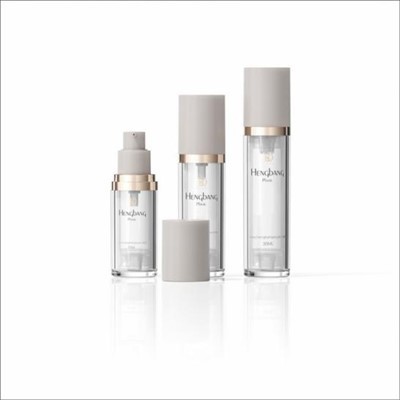
If you’re a brand looking for a PETG lotion bottle supplier that prioritizes quality and transparency, I’d love to walk you through our process in more detail. We work with brands of all sizes, from small indie skincare lines to large national personal care companies, and we can tailor our process to match your product and brand needs. Whether you need help designing a custom bottle or just want to learn more about how our PETG bottles are made, don’t hesitate to reach out to start a conversation.
Airless Travel Bottle References
- Harper, C. A., & Petrie, E. M. (2006). Plastic Materials and Processes. John Wiley & Sons.
- Rosato, D. V., & Rosato, M. G. (2000). Blow Molding Handbook. Hanser Gardner Publications.
- Society of the Plastics Industry. (2018). Guidelines for Food and Personal Care Contact Packaging Materials.
- Brandrup, J., Immergut, E. H., & Grulke, E. A. (1999). Polymer Handbook (4th ed.). John Wiley & Sons.
Yuyao Hengbang Plastic Products Co., Ltd.
As one of the most professional petg lotion bottle manufacturers and suppliers in China, we’re featured by quality products and good service. Please rest assured to wholesale bulk customized petg lotion bottle at competitive price from our factory.
Address: No. 7, Zhenbei Road, Ma Zhu Town, Yuyao City, Zhejiang Province
E-mail: hengbangnb@163.com
WebSite: https://www.yyhengbang.com/
