If you’ve ever worn an Akoya pearl necklace, you know the gentle glow these small, perfectly round pearls bring to a simple outfit. As someone who’s spent 12 years sourcing and selling Akoya pearl necklaces—first as a small boutique seller, now as a supplier working with designers and retailers across North America and Europe—one question comes up at least once a week: “Can saltwater really damage my Akoya pearls if I wear them to the beach or a dinner with a seafood menu?” The short answer is yes, but it’s not as simple as “saltwater equals instant damage.” Let’s break down the science, how saltwater interacts with Akoya pearls, and what this means for anyone who owns or sources these necklaces. Akoya Pearl Necklace
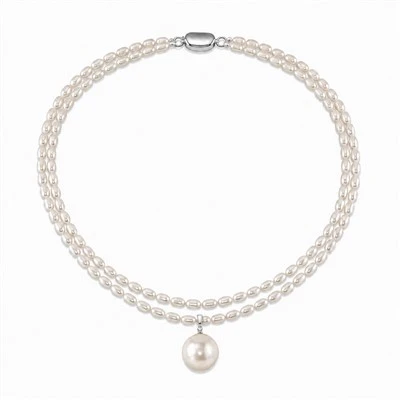
First, let’s remember what an Akoya pearl is. Unlike freshwater pearls, which form in mussels in lakes and rivers, Akoya pearls are produced by Pinctada fucata martensii, a saltwater oyster native to the coastal waters of Japan, China, and Vietnam. Their structure is key to how they react to their natural environment. Each Akoya pearl is made of layers of nacre, a combination of calcium carbonate (in the form of aragonite crystals) and organic conchiolin, a protein that acts as a binder. That structure is both Akoya’s greatest strength and its biggest weakness when exposed to saltwater.
Saltwater is a mix of water, sodium chloride, and trace minerals like magnesium, potassium, and sulfate. The problem doesn’t start with sodium chloride itself, though. It starts with something most people don’t think about: pH levels. Natural ocean water has a pH of around 8.1, slightly alkaline, but when saltwater interacts with organic materials (like sweat, soap residue, or even food oils that get on your necklace), that pH can drop. A lower pH means more acidity, and acidity is the enemy of aragonite, the main component of nacre. Over time, acidic saltwater can etch away at the pearl’s surface, dulling that signature luster. You might notice it first as faint, almost invisible scratches, or a lack of that bright, mirror-like sheen that makes Akoya pearls so coveted.
Wait, but what about wearing your Akoya necklace to a beach vacation? Let’s be honest, most of us do that at some point, and not everyone’s necklace turns into a disaster. That’s because the exposure level matters. A 10-minute walk along the shore on a dry day, with no direct saltwater spray hitting your necklace, is very different than leaving it submerged for hours in choppy, wave-filled water after a long day swimming. Submersion is the bigger risk, because saltwater can seep into the tiny gaps between the nacre layers over time, breaking down the conchiolin binder that holds the aragonite crystals together. That can lead to something called “delamination,” where thin layers of nacre start to peel away from the pearl’s surface. For a small, high-luster Akoya pearl, that damage is often permanent—polishing can’t fix delaminated nacre, and re-nucleating a pearl is impossible.
Another underdiscussed factor: the metal components of the necklace. Most Akoya pearl necklaces use gold clasps, links, or sometimes sterling silver, but even 14k gold isn’t completely immune to saltwater. Saltwater is a mild electrolyte, so it can cause corrosion on metal surfaces over time, especially if there’s any alloy in the gold (like copper, which is common in lower-karat gold). Corroded metal can leave green or brown stains on the pearls themselves, especially if the pearls are strung on silk thread. Wait—speaking of stringing: silk is another organic material, and saltwater can weaken silk over time, leading to stretched strands or even broken threads that cause pearls to fall off. As a supplier, I always tell customers that when we string our Akoya necklaces, we use high-quality Chinese silk and knot each pearl individually, but that only works if you protect the string from excess moisture.
I’ve seen this happen firsthand with a customer who came to me last year with her grandmother’s Akoya necklace. She’d worn it on a family trip to Greece, forgetting to take it off when she went snorkeling. By the time she brought it to me, the silk was frayed, two of the larger Akoya pearls had faint etch marks, and the 14k gold clasp had developed a dark patina that transferred to the pearls’ sides. It took a professional pearl restorer three months to fix it: re-stringing with new silk, polishing the clasp, and gently buffing the surface of the pearls to remove the faint etch marks. It cost her nearly as much as the necklace was worth, and we only got it back to close to its original luster. That’s a story that sticks with me, because it’s a reminder that even heirloom Akoya pearls aren’t indestructible.
But let’s get back to the science to make sure we’re not scaring people away from wearing their necklaces entirely. There are ways to mitigate saltwater damage, both for people who own necklaces and for suppliers like me who work with manufacturers to create more resilient pieces. First, let’s talk about aftercare. For anyone who wears an Akoya pearl necklace, the rule is: take it off before you go near saltwater—be it the ocean, a saltwater pool, or even a hot tub (which has higher salt levels than most natural ocean water, by the way). If you do get salt on your necklace by accident, rinse it gently with lukewarm fresh water as soon as you can, then dry it immediately with a soft, lint-free cloth. Don’t use any harsh soaps or jewelry cleaners, because those can also damage the nacre.
As a supplier, I also adjust how I source and present Akoya necklaces to account for saltwater exposure. For customers who live in coastal areas (like Florida, Southern California, or parts of Asia where saltwater is common year-round), I recommend necklaces with a clear, thin polymer coating. Wait—there’s debate in the pearl industry about coatings, right? Some people say coatings make pearls look artificial, but a durable, thin coating can act as a barrier against saltwater, preventing etch marks and delamination. The best coatings I’ve found are lead-free, non-yellowing, and don’t affect the pearl’s luster when applied correctly. I always make sure to disclose when a necklace has a coating, so customers know exactly what they’re buying. For people who don’t want a coating, I suggest limiting wear to formal occasions, and storing the necklace in a soft cloth pouch away from other jewelry (which can scratch the surface if they’re stored together).
Another point that’s often overlooked: the difference between fresh saltwater exposure (like a spill on a cruise ship) vs. prolonged immersion. A single splash on your necklace while you’re walking to a restaurant is nothing—most of the time, a quick wipe is enough. The damage only happens with repeated, prolonged exposure. I’ve had customers who live in Hawaii wear their Akoya necklaces to the beach every weekend for years, and their necklaces look brand new. Why? Because they rinse and dry them every time, and they don’t leave them submerged. It’s all about consistent, gentle care, not panic.
There’s also a common myth that Akoya pearls are only for formal wear, and never for everyday use. That’s not true—with proper care, a quality Akoya necklace can last for decades, even with occasional saltwater exposure. The key is understanding their biological structure and treating them accordingly. Nacre is essentially the same material that forms mother-of-pearl, which is found in saltwater shells, so in their natural environment, Akoya pearls are perfectly adapted to saltwater. The problem is when humans introduce other variables: soap, lotion, sweat, and food oils that alter the pH of the saltwater, creating an environment that’s harsh for the nacre. It’s not the salt itself that damages the pearl—it’s the combination of salt with other chemicals that break down the nacre.
As a supplier, I’ve also had to educate retailers who sell Akoya necklaces to customers in coastal markets. A few years ago, a boutique in Miami ordered 50 Akoya necklaces to sell to local customers, and they came back to me six months later saying 10 of them had dulled luster. I tested the necklaces and found they’d been displayed near a saltwater tank in the store—evaporation from the tank had created a humid, salty air around the necklaces, which had a gradual effect on the nacre over time. We fixed the issue by recommending they move the display to a different part of the store, and added a note on each product card about avoiding prolonged salt and humidity exposure. That experience taught me that damage doesn’t only happen when you’re at the beach—it can happen in everyday settings where salt is present in the air.
So, what does this mean for you, whether you’re a pearl owner or someone looking to source Akoya necklaces? First, know that saltwater isn’t a death sentence for your Akoya pearls—you just need to be intentional about care. If you’re buying a necklace for a special occasion (like a wedding or anniversary, where you’ll only wear it for a few hours), you don’t need to stress about a splash of champagne or a sea breeze. If you’re buying a necklace for everyday wear, especially if you live near the coast, opt for a slightly more durable option (like a coated Akoya or a sterling silver clasp with a protective lacquer) and stick to the aftercare rules. If you’re a retailer or someone looking to purchase in bulk, work with a supplier who understands the unique needs of Akoya pearls, not just someone who sees them as a generic fashion accessory.
At the end of the day, I started this business because I love the way Akoya pearls feel—soft, luminous, and timeless. I’ve seen customers pass down their Akoya necklaces from mother to daughter, and I want those stories to keep happening. Saltwater is a natural part of many people’s lives, and it shouldn’t mean you have to lock your necklace in a safe forever. It’s about balancing use with care, understanding the science, and working with someone who knows how to make a necklace that works for your lifestyle.
If you’re interested in learning more about our Akoya pearl necklaces, including options for coastal living or everyday wear, or if you’re a retailer looking to place a bulk order, feel free to reach out to discuss your needs. We’re here to answer your questions and help you find the perfect piece that fits both your style and your lifestyle.
Tahitian Pearl Necklace References
- Palanivelu, K., et al. (2018). "Effect of pH on the Stability of Calcium Carbonate in Natural Waters." Journal of Marine Science and Engineering.
- The Pearl Guide: A Comprehensive Manual for Pearl Care and Maintenance (2021). International Pearl Association.
- Wada, K. (1987). "Structural and Chemical Characteristics of Akoya Pearls." Fisheries Science.
- Metal Corrosion in Marine Environments (2020). Society for Corrosion Engineers.
- "Stringing Techniques and Preservation of Pearl Jewelry" (2019). Gems & Gemology.
Aqvune Pearls Co., Ltd.
Aqvune Pearls Co., Ltd. is one of the most experienced akoya pearl necklace manufacturers and suppliers in China, featured by quality products and low price. Please rest assured to buy class akoya pearl necklace made in China here and get pricelist from our factory. We also accept customized orders.
Address: 1903-6, Union Building, Lingzhi Street, Yuecheng District, Shaoxing City, Zhejiang Province, China
E-mail: sales@aqvunepearls.com
WebSite: https://www.aqvune-pearls.com/
