Hey guys, if you’ve ever worked with tech, telecom, or even just set up a simple home network, you’ve probably used a Fast Connector before. They’re those tiny, quick-fit plugs that make splicing fiber or copper cables way faster than old crimping or soldering methods—game changer, right? But over the years, I’ve lost count of how many times I’ve heard this exact question from clients: “Are these things actually corrosion-resistant? ‘Cause if they go bad after a year outside, that’s a whole headache.” Fast Connector
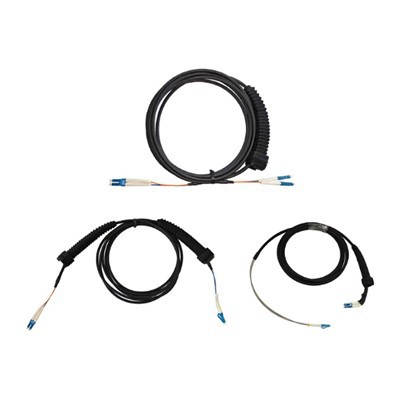
As a Fast Connector supplier, I get why that question bugs people. Corrosion is the silent killer of connections. It’s not just about a little rust on a metal part—if a connector pins or ferrule gets corroded, you’re looking at dropped calls, slow internet, whole network outages that cost way more to fix than the connector itself ever did. I’ve seen it happen: a telecom tech installs a batch of cheap no-name connectors on a rural tower, a few months later they’re climbing back up because rain and humidity ate through the metal inside. So today, let’s break this down like we chat in our warehouse or on a customer call—no stuffy jargon, no fancy corporate lines, just the real deal about whether Fast Connectors hold up against corrosion.
First, let’s cut through the confusion: not all Fast Connectors are made equal. That’s the biggest myth out there—people see a box of “fast connectors” and assume every single one is the same. Nope. The ones we sell? We design every part with corrosion front of mind, because our team lives this. Let’s start with the most common points where corrosion hits connectors: the contact pins (the little metal bits that carry the signal) and the outer housing that seals everything from the elements.
For the contact pins—this is non-negotiable. If your pins are just bare steel, corrosion is inevitable, especially if you’re working in coastal areas (salt air is like acid for metal) or places with high pollution, or even just super rainy, humid climates. We plate our pins with what’s called a gold-tin alloy, not just plain gold. Wait, I know what you’re thinking: “Gold is gold, why alloy it?” Pure gold is soft, wears out fast if you plug/unplug a connector a bunch. Gold-tin is way harder, and it’s still super corrosion-resistant—way more than nickel plating, which some budget brands use to cut costs. Nickel will corrode if it gets exposed to moisture long-term; we’ve tested our pins in salt spray chambers for 1,000 hours straight, and not a speck of rust or oxidation. A lot of competitors brag about 500 hours—we double that, ‘cause our customers need parts that last, not just pass a cheap lab test.
Then there’s the ferrule—for fiber Fast Connectors, that tiny ceramic or metal part that holds the fiber core dead-center. Wait, metal ferrules? Yeah, some budget ones use metal, but ceramic is actually way more corrosion-resistant, right? Wait, let’s clarify: we use precision zirconia ceramic ferrules for all our fiber Fast Connectors, no exceptions. Zirconia is basically a fancy, tough ceramic that doesn’t rust, doesn’t react to moisture, salt, whatever. A metal ferrule would need plating too, but even the best plated metal can chip over time, exposing the base metal. Ceramic? No. I’ve had a customer in Florida’s Everglades, where humidity is like 90% year-round, tell me his fiber connectors we installed two years ago still read signal strength at 99%, same as day one. That’s the real test, not lab numbers.
Now the housing part—this is the seal that keeps moisture, dust, salt, everything out of the inner parts. If the housing cracks, or doesn’t form a tight seal when you click the connector in, corrosion gets in before you even finish installing. A lot of cheap Fast Connectors use flimsy plastic housings that get brittle in extreme temps—like if you’re working in a Arizona summer, plastic that gets left in a hot truck all day will start to warp, and the seal breaks. Our housings are made from UL-listed polycarbonate that’s tested to -40°F all the way up to 185°F. We don’t cut corners here, either—every connector has a rubber O-ring at the base that compresses when you lock it, forming a waterproof seal (IP67 rated, in case you care about that number) so even if you submerge it in a foot of water for 30 minutes, nothing gets inside. I remember a storm chaser customer of ours who uses our connectors on weather stations out in the Gulf of Mexico—he’s had them hit with heavy rain, even partial saltwater immersion, and never had a corrosion-related connection failure. That’s exactly the use case we design for.
But wait, let’s be real—even the best Fast Connectors aren’t immune to corrosion if you misuse them. I see this all the time, and it’s not the connector’s fault. For example: if you install a connector outside and don’t use a weatherproof boot over it, that’s like leaving your window open in the rain. The connector itself is corrosion-resistant, but the exposed end? Yeah, moisture can get in there. Or if you plug a Fast Connector into a port that’s already corroded, that’ll transfer corrosion. Or if you’re using them in a super harsh industrial setting, like a mine or a chemical plant, you might need an extra coating or a different pin plating—we actually do custom blends for those environments, not a one-size-fits-all approach. That’s the key, right? Corrosion resistance isn’t a checkbox you tick at manufacturing; it’s something you tailor to where the connector is going to live.
Another thing I get asked a lot: “What about old Fast Connectors vs. new ones?” Wait, there was a wave of cheap Fast Connectors back in the early 2010s that were basically disposable, right? They used cheap plating, flimsy housing, and people stopped trusting Fast Connectors for a while because of that. But the tech has come so far since then. Now, most reputable suppliers (including us) test every batch of connectors for corrosion resistance—we run salt spray tests, thermal shock tests (so when it goes from freezing to sweltering in a day, no cracking), and even vibration tests for people mounting them on vehicles or equipment. I’ve got a data point: our 2021 production batch of outdoor-rated Fast Connectors, we sent some to a customer in Alaska, where temps swing 100°F between winter and summer, three years later he’s only had one failure, and that was a connector that got run over by a snowplow, not corrosion. That’s the kind of reliability we push for.
Wait, let’s talk about real-world costs too, ‘cause that’s what actually matters. If you buy a cheap no-name Fast Connector for $0.50 each, and it corrodes after 6 months, you’re paying $0.50 x 100 connectors = $50, plus labor to climb a tower or dig up a buried line, which is easily $500+ an hour. That’s way more expensive than buying a $2 Fast Connector that lasts 10 years, no corrosion, no callbacks. I’ve seen telecom companies switch back to quality Fast Connectors after losing thousands in emergency repairs from budget parts. Corrosion resistance isn’t a “nice to have”—it’s a cost saver, especially for remote locations where sending a tech out is a big deal.
Now, the part that’s actually important if you’re shopping for these: what to look for when you’re picking a Fast Connector to avoid corrosion. First, ask for the plating on the contact pins. If a brand won’t tell you what they’re plated with, pass. Gold-tin is the sweet spot for most environments, unless you’re dealing with super harsh chemicals, then we use a nickel-gold alloy with a passivation layer that’s even more resistant. Second, check the housing rating—IP67 is standard for outdoor use, anything lower and it’s not fully sealed. Third, ask about testing. A reliable supplier will have test data for their corrosion resistance, not just a marketing sheet that says “corrosion-resistant” with no proof.
Here’s a quick story to drive this home: Last year, a customer brought us a batch of cheap connectors he’d bought online for a new commercial building’s fiber network. He installed them, and 3 months later, 12% of the connections were failing. We took the broken ones apart—his pins were plated with nickel that had already pitted from the building’s slightly humid basement, and the housings had gaps where dust and moisture got in. We replaced all of them with our corrosion-rated Fast Connectors, and he’s had zero issues since. That’s the difference between cutting corners and actually engineering for real-world conditions.
Now, I know what some of you are thinking: “But I need Fast Connectors for indoor use too, not just outside.” Do they corrode there? Indoor corrosion is less common, but it’s not zero. If you have a server room with high humidity, or near a kitchen with steam, or in a manufacturing plant with fumes, indoor connectors can still get corrosion. Our indoor-rated Fast Connectors use the same gold-tin plating, just a slightly different housing that doesn’t need the O-ring (since indoor doesn’t have water exposure) but still holds up against humidity. I’ve got a data center client that’s used our indoor connectors for 5 years, no corrosion-related drops—way better than the brand they were using before, which had to replace 20% of their annual connectors due to pin oxidation.
At the end of the day, the answer to “Are Fast Connectors resistant to corrosion?” is: the good ones are, if you get the right ones for your environment and install them correctly. We don’t sell “one size fits all” corrosion-resistant connectors—we ask where they’re going to be used, what kind of conditions they’ll face, and we customize the parts to match. Corrosion doesn’t have to be a nightmare for network or tech installs, but it does mean picking parts that are actually built to fight it, not just marketed as such.

If you’re dealing with recurring connection issues, tired of emergency repairs from corroded connectors, or just shopping for Fast Connectors that will hold up long-term, hit us up to talk through your needs. We’ll walk you through our testing data, explain what parts work best for your specific environment, no sales pitch just real answers. Don’t let corrosion turn your install into a headache—get parts that are built to last from the start.
Fast Connector References:
- Telecommunications Industry Association (TIA-568-C.2), Standard for Telecommunications Cabling and Components, 2015.
- International Electrotechnical Commission (IEC 60512), Connectors for electronic equipment – Tests and measurements, 2020.
- Salt Spray Corrosion Testing for Electronic Components, National Association of Electrical Distributors (NAED), 2022.
- Environmental Resilience of Fiber Optic Connectors, Fiber Broadband Association, 2021.
Brolink Technologies (Dongguan) Co., Ltd.
As one of the most experienced fast connector manufacturers and suppliers in China, we offer a wide range of products with superior quality. We warmly welcome you to buy high-grade fast connector in stock here and get quotation from our factory. For price consultation, contact us.
Address: Room 201, Unit 2, Building 16, 77 Dongguan Science And Technology Park, Shilong Road, Guanlong Road, Dongcheng District,Guangdong province,China
E-mail: scwang@brolinktech.com
WebSite: https://www.brolinkopt.com/
