Hey everyone, it’s Jake, from the desiccant air dryer side of things — today we’re talking about something I get asked all the time: can a desiccant air dryer actually work in leather manufacturing? Let’s cut the corporate jargon, get real, and break this down because this isn’t some random “cool tech” fit — this is a make-or-break decision for a lot of tanneries I’ve worked with over the years. Desiccant Air Dryer
First, let’s start with what actually happens in leather making, because most people (even some folks new to the industry) don’t realize how water-heavy and humidity-dependent every step is. Leather starts as raw hides, right? Fresh from the slaughterhouse, they’re 60-70% water by weight. The whole process turns that wet, perishable hide into a durable, supple material you see in bags, shoes, couches — but if the air’s wrong at any step, you’re looking at ruined batches, wasted time, and lost cash.
Let’s walk through the key stages where air quality matters: first, the beamhouse step. That’s where you soak the hides to remove dirt, hair, and excess flesh — they’re sitting in big water tanks for days, so the air in that area is basically a steamy sauna, like 90%+ humidity, 80°F or higher. If you don’t control that air, two things go bad right away: first, the hides might start to rot (no one wants stinky, moldy hides that can’t be tanned), and second, when you move the wetted hides to the next stage (liming, then deliming), any excess moisture on their surface messes with the chemicals you’re applying. You end up with uneven absorption, weak spots, or parts that don’t tan evenly — that’s “spotted leather” that’s basically useless.
Then there’s the tanning stage itself, whether you’re using chrome tanning (super common for durability) or veg tanning (for that premium, vintage look). Tanning uses liquid chemicals, but again, the air around the process matters. If the ambient air is too humid, the chemical solution doesn’t penetrate the hide uniformly. If it’s too dry? The surface of the hide dries out too fast, leaving a hard, brittle outer layer while the inside stays wet — that’s “case hardening,” and you have to re-soak the entire hide, which adds days of work and often ruins texture.
And don’t get me started on finishing. That’s where you dye the leather, add coatings, maybe emboss patterns. If the humidity’s off here, the dye won’t cure evenly — you get streaks, or the coating bubbles because water can’t escape properly. Even after finishing, when you’re hanging leather to cool and set, bad air means moisture gets trapped in the layers, leading to mold growth weeks later when the leather’s on the shelf or in a shipment to a brand.
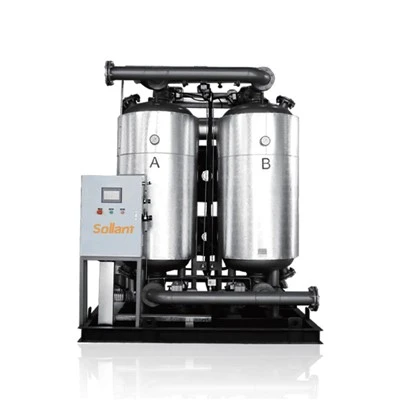
Now, let’s get to the core question: desiccant air dryers. Wait, a lot of people mix up desiccant dryers with the refrigerated dryers most people use for home AC or basic shop air — and that’s the mistake they make. Refrigerated dryers only bring air down to like 35-40°F dew point, which is basically useless for leather manufacturing, especially in steamy facilities. Desiccant dryers work differently: they pull moisture out of air using a material (silica gel, molecular sieve) that attracts water vapor, not just cools it. And here’s the big win: they can get dew points way lower — down to -40°F or even lower, depending on the model. That’s dry air, not just “less humid” air.
But wait, is that overkill? I get that question all the time. A small tannery I work with in the Midwest tried refrigerated dryers a couple years back, and their first batch of shoe leather had 12% moisture content (ideal for finished leather is 8-12%, right?) — but because the humidity was too high, the surface was at 15% while the core was at 7%. They spent a week re-tanning and still had to dump 20% of the batch. They switched to a medium-sized desiccant dryer, and now their moisture levels are dead consistent across every hide. No more rework, no more spoiled batches — that adds up to like $15k in savings a month for them, which is huge for a small operation.
Let’s talk about specific use cases where desiccant dryers are actually non-negotiable, not just a nice-to-have. First, drying stages. After tanning, most tanneries have a toggling area where they stretch hides to dry. If that’s done in low-humidity air, the leather dries slowly and evenly, keeping its suppleness. With refrigerated dryers, the dew point is too high there — you get surface drying again, same problem as before. Desiccant dryers keep that drying area at 10-15% relative humidity, so the hide loses moisture uniformly, no brittle edges, no uneven shrinkage.
Then there’s cold storage for finished leather. If you store finished leather in a space that’s even slightly humid, it absorbs moisture from the air over time, leading to mold, mildew, and that “sticky” feel when you touch it. Desiccant dryers in storage areas keep the air at 0-5% RH, so the leather stays at that ideal 8-12% moisture content for months, no issues. We had a tannery in Italy that exports leather to Asia — they used to get 8-10% of shipments rejected because of moisture damage in transit. They put desiccant dryers in their packaging areas, sealing each batch with dry air before boxing, and that rejection rate dropped to less than 1%. Game changer for their export business.
Wait, but what about energy use? I know a lot of tannery owners are tight on utility costs, so I can’t ignore that. Early desiccant dryers used a ton of energy, which made people wary. But modern models? They have heatless regeneration or blower regeneration, and even better, some have heat recovery systems that reuse the heat from drying the desiccant to heat the facility itself. So in a tannery that’s already dealing with 80°F ambient air, that heat recovery is free space heating. We did a calculation for a 500-hide-a-day tannery: a desiccant dryer costs about $12k upfront, and with energy savings, they pay that back in 18 months. That’s way shorter than most people think — it’s not a “long-term investment” that takes 5 years to break even, it’s a quick win.
I also want to address the pushback I hear: “We’ve been using refrigerated dryers for years, why change?” Let’s be real, if refrigerated dryers worked for leather, I wouldn’t be talking about desiccant dryers. But refrigerated dryers can’t get the dew point low enough for critical stages. Let’s say your finishing area is at 70°F, and you have a refrigerated dryer — that gives you about 60% RH, which is what you’d have in a bathroom. For dyeing, you need that area at 30-40% RH, max. Desiccant dryers get you there easily, no sweating the small stuff.
Another thing: hide quality consistency. Brand owners don’t want a batch of leather that’s half stiff, half floppy, or has color streaks because of uneven curing. Tanners who use desiccant dryers can guarantee a consistent product, which lets them charge 10-15% more for their leather because it’s reliable. That’s not just saving money — it’s increasing revenue, which is even better.
Wait, is there any case where a desiccant dryer isn’t needed? Yeah, if you’re a tiny tannery making just small batches of basic leather, not for premium goods. But even then, if you’ve ever lost a batch to mold or uneven drying, a small portable desiccant dryer is worth the $2k-$3k. For medium to large tanneries, any tannery doing more than 100 hides a week, it’s a no-brainer.
I hate when people act like industrial equipment is this mysterious thing that only engineers understand, so let’s keep it simple: desiccant air dryers aren’t just for compressors or factory paint lines. They work great in leather manufacturing because they fix the two biggest enemies of leather: uneven moisture and mold. We’ve worked with tanneries across North America and Europe, and every single one that switched has seen less rework, lower rejection rates, and happier clients.

If you’re a tannery owner, a production manager, or someone in the leather space dealing with humidity-related issues, hit me up to chat. I don’t do pushy sales calls — I just give honest advice, whether that means a desiccant dryer is the right fit for you, or if a smaller, less expensive solution works better. We’ve helped tanneries of all sizes tweak their air systems, and I’d be happy to do the same for you. Shoot me a message to start a conversation about how we can help your leather production run smoother.
Oxygen Generator REFERENCES
- Leather Industry Association. (2022). Humidity Control Best Practices for Tanning and Finishing.
- Industrial Drying Technologies Journal. (2021). Performance Comparison of Desiccant vs Refrigerated Air Dryers for Natural Material Processing.
- Journal of Cleaner Production. (2020). Energy Efficiency of Regenerative Desiccant Dryers in Light Industrial Manufacturing.
- International Leather Manufacturers’ Association. (2023). Post-Production Moisture Control Strategies to Reduce Product Waste.
Shanghai Sollant Energy Saving Technology Co., Ltd.
As one of the most professional desiccant air dryer manufacturers and suppliers in China, we’re featured by quality products and good service. We warmly welcome you to buy bulk advanced desiccant air dryer from our factory. If you have any enquiry about cooperation, please feel free to email us.
Address: No.215, Songri Center, Beihongqiao, Jiading District, Shanghai, China
E-mail: info4@sollant.com
WebSite: https://www.sollanttreatment.com/
