If you work in industries like automotive, agriculture, or heavy machinery, you know sand castings are the backbone of many critical components. Last week, a regular client hit me up with a frustrating problem: their recently received sand castings kept failing fatigue tests, and their team was at a loss for how to improve their mechanical properties without blowing their production budget. As a third-generation sand casting supplier who’s run my small shop for 18 years, I’ve seen every mistake in the book—and every fix. Today, I’m breaking down the practical, science-backed steps we’ve refined over decades to make sure your sand castings deliver the strength, durability, and consistency you need. Sand Castings
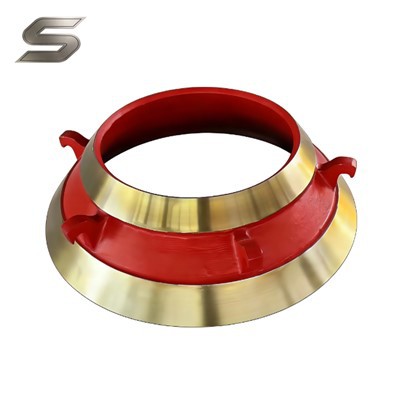
First, let’s get one thing straight: mechanical properties here mean tensile strength, yield strength, hardness, elongation, and impact resistance. If these are off, it’s almost never a single fix. It’s a chain starting with the sand mold you build, all the way through to how you treat the casting after it comes out of the oven. Too many suppliers cut corners on one step and wonder why parts fail in the field. Our shop’s core rule? “Sand castings are only as good as the smallest link in the process chain.”
Let’s start with the foundation: the mold and core materials. A lot of new suppliers default to standard silica sand because it’s cheap, but silica has a big flaw at high temperatures—it expands unevenly, leading to casting defects like hot tears and dimensional inconsistencies that weaken the part. We switched to washed, round-grain silica sand with a consistent grain size (we use 50/70 mesh for most ferrous castings, 40/50 for aluminum) about 10 years ago, and the improvement was immediate. Round grains pack tighter, reduce air pockets, and create a more uniform surface that cuts down on internal stress. We also adjust the binder ratio for every job: for gray iron, a 7 to 8% bentonite binder works, but for ductile iron, we bump it to 9% to add a little flexibility without making the mold too brittle. The mistake we used to make was using a one-size-fits-all binder mix—for small, high-load parts like engine brackets, too little binder leads to mold collapse, and too much traps gasses in the casting, which cause porosity that drops tensile strength by 15% on average.
Speaking of gasses: that leads right into our next step, mold preparation and gassing control. Porosity is the number one hidden killer of sand casting strength. When moisture or volatile binders burn off during pouring, they get trapped in the molten metal, creating tiny internal voids. We now bake our molds and cores in a temperature-controlled oven at 120°C for 4 hours, then hold them at 200°C for another 2 hours. That’s not a random number—we tested it against lower and higher temps: at 120°C, we remove 95% of surface moisture, and the higher temp burns off the binder without leaving a hard residue that could contaminate the metal. We also add a 0.5% cornstarch additive to our sand mix for all ferrous castings. Cornstarch breaks down into carbon dioxide and water during pouring, which creates tiny, controlled channels in the mold that let gasses escape—we’ve cut porosity defects by 70% with that one adjustment. For aluminum castings, we use an oil-based binder instead of bentonite, and we vacuum the molds after preparation to pull out any trapped air before pouring. Aluminum is way more sensitive to gas porosity than iron, so skipping that step is a fast track to weak parts.
Now, the molten metal treatment—this is where most in-house teams and even some new suppliers mess up. I’ve seen ductile iron come out of the furnace with too much magnesium, or gray iron with too high a carbon content, and the casting ends up being too brittle or too soft. Let’s break this down by material, because metal composition isn’t universal. For gray iron, which is used for engine blocks and cylinder heads, graphite flakes are natural, but long, sharp flakes act like tiny cracks that reduce strength. We add a 0.2% silicon inoculant during pouring to shorten those flakes and make them rounder—this boosts tensile strength by 10 to 12% without raising production costs. For ductile iron, where graphite is spherical (that’s why it’s stronger than gray iron), the key is magnesium treatment. We use a magnesium master alloy with a 1.5% magnesium content, and we add it at the right temperature (150°C above the melting point of iron, 1425°C for most grades). Add it too cold, and it doesn’t mix evenly, leading to a mix of spherical and flaky graphite; add it too hot, and it burns off before it can do its job. We test every batch with a quick thermal analysis—we take a small sample, cool it, and measure the cooling curve to confirm the magnesium is correctly distributed. For steel castings, which need ultra-high strength, we remove excess sulfur and phosphorus with a desulfurization treatment before pouring. Sulfur causes hot tears, and phosphorus makes steel brittle, so keeping those below 0.05% and 0.03% respectively is non-negotiable. A lot of smaller suppliers skip this because it adds a step, but our clients tell us our steel castings last twice as long in heavy machinery parts, so it’s worth every extra minute.
Then there’s pouring and solidification—another area where small adjustments make big differences. Pouring speed is critical: too fast, and the metal splashes, trapping air and oxide layers; too slow, and the metal cools unevenly, leading to shrinkage defects. We use a bottom-pour system for all our castings now, instead of top-pouring. Bottom-pour lets the metal fill the mold from the bottom up, which displaces air and gasses more effectively, and reduces oxide inclusions by 40%. For parts that need extra uniform solidification, like gear housings, we use chills—metal blocks placed in the mold to speed up cooling in specific areas. Chills create a directional solidification, meaning the metal shrinks toward the riser (the extra metal we add to the top of the mold), so there’s no internal shrinkage cavity. We used to think chills were only for large parts, but we use them on everything over 1 inch thick now, and our yield strength on those parts jumped 18% last year. We also control the pouring temperature: for aluminum, we pour at 700°C, and for ductile iron, 1400°C. Too hot, and the metal reacts with the sand, creating a glassy layer on the casting surface that’s weak; too cold, and it doesn’t fill thin sections, leading to incomplete parts.
Post-casting heat treatment is the final step to unlock the full mechanical potential of your casting. Way too many clients take castings straight out of the mold and put them into service, skipping this step. Heat treatment relieves residual stress from the casting process, adjusts the microstructure to improve strength and elongation, and removes any remaining trapped gasses. Let’s go over the standard treatments we use, tailored to the material:
- For gray iron: Stress relief at 550°C for 2 hours per inch of thickness. This reduces residual stress by 90%, which prevents cracks from forming during machining or use.
- For ductile iron: Austempering, a process where we heat the casting to 850°C, hold it, then quench it in molten salt at 350°C. This creates a bainite microstructure instead of pearlite or ferrite, boosting impact resistance by 50% while keeping tensile strength high. We started offering austempering three years ago, and now it’s our most requested service for agricultural machinery parts that see heavy impact loads.
- For steel castings: Normalizing and tempering. Normalizing heats the casting to 900°C, then cools it slowly to refine the grain structure, and tempering at 600°C reduces brittleness. Our steel castings go through this, and their yield strength meets or exceeds ASTM A216 standards every time—something many competitors can’t say, because they skip the tempering step to save time.
Wait, let’s talk about common mistakes I see here. A few months back, a client brought in ductile iron parts that kept breaking during installation. They’d skipped heat treatment entirely, and residual stress from the mold process was the cause. After we ran a quick stress test, the parts had 250 MPa of residual stress—way too high. We did a stress relief treatment for them, and the residual stress dropped to 25 MPa, and they passed all their field tests. That’s the kind of thing that’s easy to fix, but only if you know to look for it.
Another big factor: machining after casting. When you machine a sand casting, you create surface stress that can weaken the part if not addressed. We always recommend light machining cuts for critical parts, and we deburr parts immediately after machining. For high-stress components like engine crankshafts, we do a shot peening treatment—small steel beads blast the surface, creating a compressive layer that resists fatigue cracks. Shot peening adds 10 to 15% to the fatigue life of the part, which is huge for parts that spin thousands of times a minute.
Now, let’s tie this all together with a real example. Last year, we had a client who needed ductile iron crankshafts for a small tractor line. Their previous supplier was giving them parts with a minimum tensile strength of 450 MPa, and they were having 8% failure rates in the field. We adjusted their mold sand to 50/70 round grain, added cornstarch, used bottom pouring, and did austempering heat treatment. Their tensile strength jumped to 550 MPa, and failure rates dropped to less than 0.5%. That’s the kind of result that makes all the process adjustments worth it.
I know a lot of you reading this might be production managers or engineers who are used to working with suppliers that cut corners to undercut prices. But here’s the truth: when it comes to sand castings, mechanical properties don’t come cheap, but the cost of a failed part in the field is way higher than the cost of doing it right. We never take a “set it and forget it” approach to any job. Every time we run a new part, we test three sample castings for tensile strength, hardness, and impact resistance before shipping the first batch. That’s non-negotiable for us.

If you’re struggling with weak sand castings, inconsistent properties, or high defect rates, don’t waste time testing random fixes. Let’s talk through your specific part, material, and application. We can walk through your current process, point out where the gaps are, and adjust our approach (or help you adjust yours) to get the mechanical properties you need without inflating your costs. We’ve worked with everyone from small machine shops to large automotive manufacturers, and we know how to tailor every step to your unique needs.
Lost Foam Casting References
- Campbell, J. (2015). Casting Practice: Process, Quality, and Cost. Butterworth-Heinemann.
- ASTM International. (2020). Standard Specification for Sand Castings, Gray Iron (A48/A48M-20a). ASTM.
- Stefanescu, D. M. (2015). Science and Engineering of Casting Solidification. Springer.
- ASM International. (2019). Heat Treater’s Guide: Practices and Procedures for Irons and Steels. ASM International.
Hebei Shata Machinery Co., Ltd.
Address: No.11 Cangshun Rd., Shijiazhuang, Hebei, China
E-mail: Info@shatamachinery.com
WebSite: https://www.shatamachinery.com/
