If you’ve ever spent hours measuring for carpet protection film only to end up with a roll that’s too short, too narrow, or so much extra you’re tripping over scraps, you know how frustrating it is. As a carpet protection film supplier who’s fielded these questions from construction managers, home renovators, and event planners for over 7 years, I’m here to break down exactly how to get your measurements right—no guesswork, no wasted rolls, no last-minute runs to the store. Carpet Protection Film

First, let’s start with the basics: carpet protection film isn’t one-size-fits-all. Even if you buy from the same supplier, wrong measurements mean you’ll either miss critical high-traffic spots (like a hallway leading to a job site’s entrance) or pay for way more than you need. I’ve seen contractors buy 50 feet of film for a 30-foot space because they forgot to add 6 inches on each end for overlap, and event coordinators cut corners on doorways because they didn’t account for a 2-inch gap at the bottom that gets scuffed by shoes. Let’s fix that step by step.
Step 1: Map your space first—don’t just measure the floor
A lot of people grab a tape measure and start running it along the carpet, but that’s a mistake. Before you do any measuring, draw a quick rough sketch of the area(s) you need to cover. This doesn’t have to be perfect—even a stick figure outline of a living room, hallway, or event venue works. Mark every door, threshold, staircase, and any permanent fixtures (like built-in bookshelves or a vanity) that stick out into the carpet. Why? Those spots are where you’ll need to adjust your measurements, not just length and width. For example, if a bookshelf sticks 12 inches into a 10-foot-wide hallway, you’ll need to trim the film to fit around it, but you also have to make sure the film covers the rest of the space so no carpet is exposed around the base of the shelf. Pro tip: Add 10% extra to your total area when mapping for stairs or irregular spaces—construction debris always seems to go where you least expect it.
Step 2: Measure length and width correctly (no shortcuts)
For flat, open areas (like a main floor room or a conference hall), grab a stiff tape measure (not a flexible tailor’s tape—they stretch and give wrong readings). Start with width first: Measure from one wall baseboard to the other, right at the floor. Don’t measure across the top of baseboards—carpet lays against the baseboard, so that’s the actual edge you need to cover. Now, add 6 inches to both sides. Wait, why 6 inches? That’s for overlap at the seams if you need multiple rolls, but also to tuck the film under baseboards so it doesn’t lift when people walk over it. A lot of people skip this and end up with a 1-inch gap at the wall that gets filled with dust, paint, or dirt before the project even finishes.
For length, do the same: Measure from the entrance door threshold to the far end of the room, where the carpet meets another surface (like tile or hardwood). Add 6 inches to both the start and end. If you’re covering a staircase, things change a little—stairs have treads (the flat part you step on) and risers (the vertical part between steps). Measure each tread’s width (from front to back, not side to side) and add 4 inches to tuck under the nosing (the edge of the step) so the film doesn’t slip when someone carries a ladder up. For risers, you don’t always need film—unless the space has heavy traffic, like a construction job site. If you do cover risers, measure their height and add 2 inches on top to fold over the tread when you secure it.
Step 3: Account for seams and overlaps—this is where most people mess up
If your space is wider than the standard 36-inch or 48-inch roll we (suppliers) carry, you’ll need to piece multiple rolls together. Here’s the rule: Never overlap less than 2 inches. If you do 1 inch or less, the seam will lift, paint will seep under it, and you’ll end up with a mess when you pull the film off. For larger events, like a wedding venue with a 20-foot-wide dance floor, you might need three 48-inch rolls laid side by side. So instead of just adding the widths (48 x 3 = 144 inches), add 2 inches of overlap per seam: 144 + (2 x 2) = 148 inches total width. That way, when you lay the rolls, each seam has a solid 2-inch overlap that’s secured with tape (another tip: use acrylic tape, not duct tape, because it won’t leave residue on carpet later).
Another seam mistake: Working around doorways. If a doorway is 32 inches wide and your film is 48 inches, you’ll cut a strip of film to the height of the doorway (from threshold to top of door frame) and lay it over the doorway, overlapping the main hallway film by 2 inches on both sides. Don’t just cut the film to fit the doorway—you’ll leave a gap where people step in and out, and carpet will get stained before you even finish the project.
Step 4: Test for extra traffic spots that need more protection
Wait, this isn’t just about covering the carpet—it’s about covering it where it matters most. If the space has a load-in area (where furniture gets carried in), a snack station at an event, or a stair landing with heavy foot traffic, you might want to add a second layer of film here. When measuring for this, make sure the second layer extends 12 inches past the edges of the high-traffic spot so the entire area is double-covered. A lot of customers skip this and end up having to reapply film halfway through a job, which is way more work than adding a few extra inches to your measurements upfront.
Common mistakes to avoid (I see these every single week)
- Measuring from baseboard top instead of bottom: The extra inch from the top will make your film too wide, and you’ll end up with bunches at the wall that trip people or catch debris.
- Forgetting stairs’ nosing: If you don’t tuck the film under the nosing, it’ll slide up when someone steps on it, exposing the edge of the stair carpet to scuffs.
- Buying exactly the square footage you calculate: Add 5-10% extra, especially for construction. Paint drips, nail holes, and moving furniture always mean you’ll use a little more than you planned.
- Ignoring irregular shapes: If your space has a nook or a curved wall, don’t just measure the longest straight part. Add 8 inches around the curved edges to make sure no carpet is exposed in the tight spots.
Now, let’s do a quick example to make this real. Say you’re a contractor covering a 10-foot-wide, 15-foot-long bedroom for a renovation. The walls are straight, no nooks, no stairs.
- Width: 10 feet + 6 inches (left) + 6 inches (right) = 11 feet
- Length: 15 feet + 6 inches (start) + 6 inches (end) = 16 feet
- Total area: 11 x 16 = 176 square feet. Add 5% extra for cuts: 176 + 8.8 = ~185 square feet. That’s how much film you need, not the 150 square feet you’d get from just multiplying 10 x 15. If you bought 150, you’d be short 35 square feet before you even start—enough to miss covering the 6-inch gap under the door or the edge of the closet.
If you’re still not sure about your measurements, that’s totally fine! As a supplier, I don’t expect you to be a measuring expert. We’ve helped thousands of customers tweak their numbers over the years—whether you’re a small homeowner doing a bathroom remodel or a large event company covering a whole convention center. We can even send a sample roll of film so you can test the fit before you buy, no strings attached.
When you’re ready to place an order, just reach out and tell us your space details: if it’s flat, has stairs, needs double layers for high traffic, or any other quirks. We’ll send you the exact roll sizes you need, no wasted material, no wrong measurements. Don’t risk another project getting delayed because of bad film—get the measurements right, and your carpet will stay clean, scratch-free, and ready for whatever comes next.
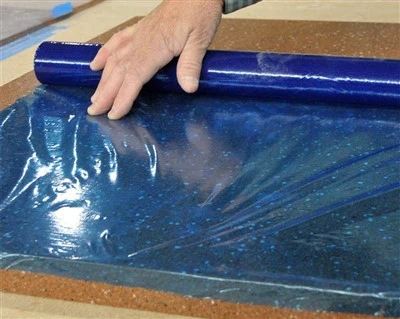
If you have questions, hit us up anytime to talk through your measurement needs or order details. We’re here to help make your project smoother, one roll at a time.
Stainless Steel Protection Film References
- Carpet and Rug Institute. (2022). Guide to Protective Film Application for Residential and Commercial Spaces.
- Construction Safety Association of Ontario. (2021). Temporary Floor Protection Best Practices for Renovation Sites.
- Event Industry Council. (2023). Temporary Surface Covering Specifications for Indoor Venues.
- American Society for Testing and Materials. (2020). Standard Guide for Measuring Floor Protection Materials in High-Traffic Areas.
Haining Huanan New Material Technology Co., Ltd.
Haining Huanan New Material Technology Co., Ltd. is one of the leading carpet protection film manufacturers and suppliers in China for over 20 years. We warmly welcome you to wholesale high quality carpet protection film made in China here from our factory. For more cheap products, contact us now.
Address: NO.5 BEIZHUANG EAST ROAD, HAINING ECONOMIC DEVELOPMENT ZONE, HAINING,JIAXING, ZHEJIANG,CHINA
E-mail: fiona@zj-hnhn.com
WebSite: https://www.hnhnfilms.com/
