If you’ve ever wandered around a construction site or helped your contractor finish a bathroom remodel, you’ve probably heard a few random, seemingly niche terms thrown around—like “floor drain riser.” At first glance, it sounds like some weird plumbing gadget, but as a floor drain supplier, I can tell you this part is way more important than most people realize. Skip the Google deep dive for a sec, and let’s break this down like we’re chatting over coffee (no fancy jargon, promise). Floor Drains
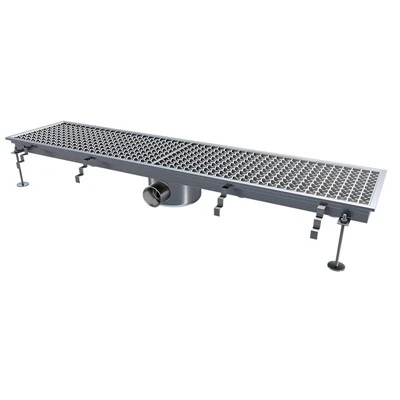
First off, let’s keep it simple: a floor drain riser is basically a vertical extension pipe. It connects the bottom of a floor drain (the part that sits flush with your bathroom or patio floor) to the main drain line running under the concrete or slab. Think of it like a straw for your floor drain—too short, and you can’t reach the main drain; too long, and you risk pooling water or clogs from misalignment. We’re talking straight PVC most of the time, but sometimes ABS or even cast iron depending on the job.
Now, why does this matter so much? Let’s start with installations. When a builder pours a concrete slab for a new home, they don’t just drop a drain into it last minute. The slab’s thickness varies, right? A bathroom slab might be 4 inches thick, while a laundry room could be 6. The riser’s job is to bridge that gap. Without it, the drain would sit too low, or you’d have to cut into the concrete later— which is a nightmare. Way back in the day, some cheap contractors tried to skip risers and just glued the drain straight to the main line, but that’s a one-way ticket to drain replacement hell. Leaks usually pop up within a year because the slab shifts, the pipe expands, and there’s no flexibility there.
Speaking of flexibility, modern risers have come a long way. Back when I started in this biz 10 years ago, most risers were rigid—cut to exact lengths, no room for error. If the slab ended up being a quarter inch thicker than planned, you either wasted a pipe or hacked away at the concrete. Now? We stock adjustable risers that can extend 2 inches, 3 inches, even 5 inches with a simple twist. That’s a game-changer for both contractors and homeowners. One of our regular clients, a local plumber named Mike, told me last month he uses adjustable risers 90% of the time now. “I used to spend an hour cutting and fitting rigid ones on small jobs,” he said. “Now I grab an adjustable one, adjust it to size, and move on. Saves me so much time.”
Wait, but there’s more to it than just size. The height of the riser affects drainage speed too. If it’s too short, the trap (that curved part of the drain that holds water to keep sewer gases out) might sit too low. No trap = smells from the sewer creeping up into your bathroom. Gross. If it’s too tall, the water has to travel farther to hit the main line, which means slow draining showers and tubs. Nobody wants to step out of a shower into a puddle because the drain can’t keep up. That’s why we always tell installers: measure twice, pick the right riser. It’s not a “set it and forget it” part—get this wrong, and you’re dealing with complaints for months after the job wraps.
Another big use case: retrofits. If you’re adding a floor drain to an old basement or a sunroom, chances are the existing main line is lower than where you want the new drain. The riser lets you lift the drain up to the finished floor level without digging up the whole space. I had a homeowner hit me up last year who was trying to turn her old mudroom into a laundry room. The main drain was 18 inches below the finished floor, and she didn’t want to demo tile and concrete. We sent her a 16-inch riser with a coupling, and she installed it herself (though I told her to call a plumber if she wasn’t 100% comfortable—no need to mess up water lines). It worked like a charm, and she sent us a photo of her new laundry setup a week later. Small wins, right?
Now, let’s talk about the mistakes we see all the time. Some contractors cut corners by using a too-thin riser, or gluing it without a rubber coupling. That leads to cracks when the ground freezes (if you’re in a colder climate) or when people step on the drain. Or they forget to add a vent near the riser—wait, no, the riser itself doesn’t vent, but the drain does. Wait, let me correct that: the riser’s connection to the drain should have a proper seal so sewer gases don’t leak out. I’ve had customers tell me their bathroom smelled like sewage, and when we checked the riser, it was glued crooked, leaving a tiny gap. That’s such an easy fix if you pick the right riser and take your time.
Also, material matters. For residential bathrooms, PVC risers are perfect—cheap, easy to cut, durable. For commercial spaces, like a restaurant kitchen floor drain, we recommend cast iron risers. They handle way more weight (restaurant kitchens have big walk-in fridges, tables, people sloshing around with water and grease) and don’t get cracked as easily. Grease is another thing—PVC can hold grease if the riser is too long, right? So if you’re in a commercial spot, shorter cast iron risers are better because they let water move faster, flushing out any buildup before it clogs. We actually stock separate lines for residential and commercial, because one size definitely doesn’t fit all.
Wait, can I mention a recent project that highlights this? A few months back, we supplied risers for a new sports bar downtown. Their kitchen had three floor drains, and each needed a different riser height—one was 6 inches, another 8, the third 10. The contractor used our adjustable cast iron risers, and he texted me mid-install saying how much he liked that he didn’t have to run back to the supply house three times. That’s the thing about being a supplier—we’re not just selling a pipe, we’re making someone’s job easier. If a plumber saves an hour on a job, they can take another one that day. That’s good for them, good for us, and good for the customer who gets their space done faster.
Now, let’s get real—do you need a floor drain riser for every floor drain? No. If your slab is exactly the thickness of the drain’s base, you can skip it and just glue the drain straight to the main line. But 9 times out of 10, the slab isn’t that perfect. Builders usually plan for some variation, or homeowners want to add a drain later when the slab is already poured. So yeah, it’s a pretty standard part now. I even see it in outdoor patio drains—if you’re putting a drain under a patio that’s been paved, the riser lifts the drain up to the top of the pavers so water doesn’t pool on the surface.
Here’s a tip I give everyone: when you’re picking a riser, check the diameter. Most floor drains are 2 inches or 3 inches, so your riser needs to match that. If you get a 2-inch riser for a 3-inch drain, the connection will be loose, and that’s a leak waiting to happen. We have a chart on our site (though I won’t link it here) that matches drain sizes to riser sizes, and our sales team is always happy to help you pick the right one. No stupid questions—we’ve been doing this long enough to know that even the most seasoned plumbers need a second check sometimes.
Now, let’s circle back to why this matters for you, whether you’re a contractor, a homeowner, or someone just trying to learn about drains. A floor drain riser isn’t a flashy part. It’s not a fancy faucet or a big shower head that makes your bathroom look cool. But if it’s wrong, it can turn a simple bathroom into a smelly, slow-draining mess that costs thousands to fix. That’s why we focus on making good risers—we don’t cut corners, we test every batch to make sure they don’t crack under pressure, and we have options for every job.
If you’re working on a project right now, or you’re a contractor looking for a reliable supplier, we’re here. We stock all kinds of risers—adjustable, rigid, residential, commercial, PVC, cast iron—at prices that won’t break the bank. We can ship to most areas, and if you have a question, just hit us up. No robotic auto-replies, no sales pitches that go on forever—just real people who know floor drains inside and out. We’ve supplied jobs from tiny home remodels to big commercial builds, and we’ve got the experience to help you get the right part, on time, every time.
When you’re picking a floor drain, don’t sleep on the riser. It’s the part that holds everything together, literally. Get a cheap, flimsy one, and you’ll be back ordering a replacement in 6 months. Get a good one from a supplier you can trust, and it’ll last the life of your drain. That’s the difference between a job that works and one that gives you headaches.

If you want to chat about your project, whether it’s a small home fix or a big commercial job, we’d love to connect. Just reach out and tell us what you need—we can help you pick the right riser, the right drain, and make sure your installation goes smoothly. No guesswork, no hassle, just a good product that does what it’s supposed to do.
Drainage Systems References:
- International Plumbing Code, Section 1004.3 (Drain Installations)
- Plumbing-Heating-Cooling Contractors Association, Residential Drain Access Standards
- American Society of Mechanical Engineers, Plastic Pipe Installation Guidelines for Drainage Systems
- National Association of Home Builders, Slab-on-Grade Construction Best Practices
Hangzhou Moonbay Industrial Co., Ltd.
Hangzhou Moonbay Industrial Co., Ltd. is one of the most professional floor drains manufacturers and suppliers in China. Please feel free to wholesale the newest floor drains made in China here from our factory. All customized stainless steel drainage systems are with high quality and low price.
Address: Room B205, No.776 Jianshe 1st Road, Xiaoshan District, Hangzhou Zhejiang, China. Zip Code: 311215
E-mail: vera@chinamoonbay.com
WebSite: https://www.moonbayfloordrain.com/
