If you’ve ever leaned into a kitchen base cabinet to reach a heavy mixing bowl, or stacked a full load of cast iron skillets on a shelf, you’ve probably thought: “Just how much weight is this thing actually supposed to hold?” As a base cabinets supplier who’s worked with residential contractors, DIYers, and commercial kitchen designers for over a decade, I get this question all the time—and it’s one of the most common, and most misunderstood, when it comes to cabinetry. A lot of people assume all base cabinets are built the same, or that there’s a one-size-fits-all number for weight capacity. But the truth is, how much weight a base cabinet can hold depends on way more than just how big it is. Today, I’m breaking down the science, the industry standards, and the real-world limits you need to know—plus how to make sure your cabinets hold up to whatever you throw at them (literally). Base Cabinets
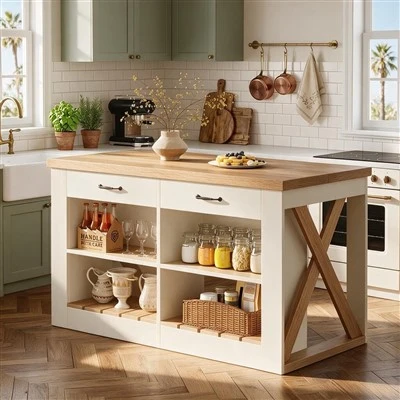
First, let’s start with the basics: what even is a base cabinet? Unlike wall cabinets that hang from studs, base cabinets sit on the floor, which means their entire weight rests on the subfloor—so their load-bearing potential is tied directly to how they’re anchored, not just the cabinet itself. But that doesn’t mean the cabinet’s internal structure doesn’t matter. Let’s get into the core components that determine capacity. The most important part, hands down, is the cabinet’s framing. Most quality base cabinets use either face frame or frameless (also called full-access) construction, and the difference in load capacity between the two is significant. Face frame cabinets have a solid wood (or high-quality plywood) frame that runs along the front of the cabinet, with stiles (vertical pieces) and rails (horizontal pieces) that connect to the cabinet’s side panels. For standard 24-inch-deep, 34.5-inch-tall face frame base cabinets (the industry standard for kitchens), that frame is built to support up to 200 pounds per linear foot for the entire cabinet box. Wait, let me explain that: a 30-inch-wide face frame base cabinet has 2.5 linear feet of front frame, so that translates to roughly 500 pounds of total load across all its shelves. That number jumps if it’s a commercial-grade face frame cabinet—we build those with ¾-inch solid oak stiles instead of ½-inch plywood, and they can hold up to 300 pounds per linear foot, so that same 30-inch cabinet is good for 750 pounds total.
Frameless cabinets, which are super popular for modern kitchens because they give more interior space, have the stiles and rails inside the cabinet box, not on the front edge. Most frameless cabinets use ½-inch or ⅝-inch plywood side panels, and their load capacity is a little lower than face frame for residential models—usually around 150 pounds per linear foot, so a 30-inch frameless cabinet is about 375 pounds total. Again, commercial frameless steps that up, with ¾-inch Baltic birch plywood sides, hitting 250 pounds per linear foot, so that 30-inch is 625 pounds. But here’s where the anchor comes in: even if your cabinet box is rated for 500 pounds, if you only screw it to the drywall instead of the floor’s joists, that capacity drops hard. Drywall is only good for a few pounds, so anchoring your base cabinets to the floor is non-negotiable for supporting heavy loads. Most building codes require at least two screws per cabinet side, driven through the cabinet’s base rail and into the floor joists—if you skip that, your cabinet might pull away from the wall or sag over time, even with light loads.
Next up, the shelves inside the cabinet. Most people only think about the box, but weak shelves are the number one reason cabinets fail. Let’s talk shelf construction. For residential cabinets, standard shelves are usually ½-inch plywood or particleboard. Particleboard is cheap, but it’s terrible for heavy loads—it can only hold about 50 pounds per linear foot before it starts to bow, and once it absorbs moisture (which happens all the time in kitchens with spills or high humidity), it weakens even more. Plywood is way better: ½-inch plywood shelves hold about 75 pounds per linear foot, while ¾-inch plywood shelves can hit 125 pounds per linear foot. For context, a standard 12-inch-wide shelf (common in lower kitchen cabinets) is 1 foot of linear space, so a ¾-inch plywood shelf can hold 125 pounds on its own. If you’re stacking that shelf with a 50-pound bag of dog food, a 30-pound cooler, and a 45-pound sack of potatoes, that’s more than enough. But if you’re putting a refrigerator drawer base, a wine rack with 20 full bottles (each wine bottle is about 2.6 pounds, so that’s 52 pounds), or a heavy kitchen appliance on a shelf, you want to bump up to ¾-inch plywood. And don’t forget shelf supports: the little plastic or metal brackets that hold the shelf up. Plastic brackets are only good for light items—max 25 pounds per bracket. Metal L-brackets or bracket systems that attach to the cabinet’s sides? Those can hold 100+ pounds each, and if you use three per shelf, that extra support will double your shelf’s capacity.
Now, let’s get to the numbers you actually care about for common scenarios, because all that linear foot math can feel abstract. Let’s break down real-world use cases for standard base cabinets, which are 24 inches deep, 24 inches high (plus a 1.5-inch toe kick at the bottom, so the total height to the countertop is 34.5 inches). For a standard residential face frame base cabinet:
- A standard upper shelf (used for pots, pans, dry goods): 500 pounds total capacity for the whole cabinet. That means you can have two shelves holding 200 pounds each, plus a drawer with 100 pounds of utensils, and still have 0 left—wait, no, actually, it’s better to spread weight across shelves, not pile it all on one. The cabinet’s frame is designed to distribute weight evenly, so if you put all 500 pounds on one shelf, you’ll probably see sag within a year, but spreading it across two shelves at 250 pounds each is totally safe.
- Heavy-duty storage: If you’re using a base cabinet for a small appliance garage, a built-in dog feeder, or a storage station for tools, you’re looking at around 350 pounds of total load. That works for a washer and dryer pedestal in a laundry room base cabinet, or a pair of cast iron skillets, Dutch oven, and a 20-pound bag of rice.
- Commercial use: A base cabinet for a small café or bakery is built to hold 750 pounds total. That’s enough for a 50-pound stand mixer, a stack of baking sheets, and a cooler that fits inside the cabinet—no problem at all.
What about mistakes that people make that crush cabinet capacity? The biggest one I see is overloading drawers. A lot of people think drawers are made for light stuff like silverware and napkins, but standard residential drawers can hold 100 to 150 pounds each. Wait, that’s a lot, right? But if you have a drawer full of 20+ cast iron skillets, each weighing 10 to 15 pounds, that’s 200 to 300 pounds—way over the limit, and you’ll end up with a broken drawer slide, or a drawer that falls out when you open it. Commercial drawers are built to hold up to 300 pounds each, which is perfect for bakery storage or restaurant use. Another common mistake is not accounting for countertop weight. Oh, right! I can’t believe I almost forgot this. The countertop that sits on top of your base cabinet is a huge part of the total load. A laminate countertop is about 25 pounds per square foot, so a 30-inch-wide, 24-inch-deep counter is 5 square feet, that’s 125 pounds. A quartz countertop? That’s 25 pounds per square foot too, so same. But a solid surface or concrete countertop? That’s 30 to 40 pounds per square foot, so that same counter is 150 to 200 pounds. And granite? Wait, granite is way heavier—40 to 50 pounds per square foot, so that same base cabinet has to support 200 to 250 pounds just from the countertop, before you add any stuff inside. That’s why if you’re installing a heavy countertop like granite, you need a reinforced base cabinet, with extra stiles in the frame to support that extra weight. We offer reinforced base cabinets specifically for granite and concrete countertops, with 1.5-inch solid wood front rails instead of 1-inch, so they can handle that extra 100+ pounds of countertop weight without sagging.
What about weird, custom cases? Like a base cabinet that’s 48 inches wide, built for a farmhouse sink? Those are super popular, and they come with their own weight considerations. A farmhouse sink can weigh 100 to 200 pounds, so the base cabinet under it needs extra reinforcement. We build farmhouse sink base cabinets with a full plywood frame across the bottom, spanning the entire width, instead of just the two side panels, so the sink’s weight is distributed evenly. A 48-inch farmhouse sink base cabinet is rated for 800 pounds total, which is more than enough for the sink plus a few heavy items inside. What about base cabinets for a home gym? A lot of people are turning base cabinets into storage for dumbbells, kettlebells, and weight plates. A single 5-pound weight plate is easy, but a 45-pound plate is standard, and if you have 10 of those, that’s 450 pounds. A standard residential base cabinet can handle that, but you want to make sure you put the weight low, not high up on a shelf where it could tip the cabinet if you open a drawer above it. That’s another good rule of thumb: heavy items on the bottom, light on top, always. That keeps the cabinet balanced and reduces strain on the frame.
Let’s talk about long-term vs. short-term capacity, too. A lot of people ask, “Can my base cabinet hold 500 pounds for a week while I remodel?” The answer is probably yes, but long-term, holding that much weight is bad for the cabinet’s structure. Even if the cabinet is rated for 500 pounds, putting that much weight on it every day will cause the shelves to bow, the frame to shift, and the drawer slides to wear out faster over time. For example, if you use a ¼-inch particleboard shelf to hold 100 pounds every day, it will bow permanently within a few months. A ¾-inch plywood shelf holding that same weight will hold up for decades, no problem. That’s why investing in higher-quality materials pays off, even if it’s a little more upfront.
Common myths I hear all the time: “All base cabinets hold the same weight.” No way—we’ve had customers buy cheap big-box base cabinets, and when they tried to put a granite countertop on them, the frame sagged within a year because the stiles were only ½-inch softwood. Another myth: “Frameless cabinets are weaker than face frame.” That’s only true if you buy cheap frameless cabinets from a big box store. Commercial-grade frameless cabinets with ¾-inch Baltic birch sides and plywood shelves are just as strong as face frame, if not stronger, because there’s no face frame to block access and take up space. The weakness comes from build quality, not the style of cabinet. And finally: “You don’t need to anchor base cabinets to the floor.” Even if your countertop is heavy, anchoring to the floor is what prevents the cabinet from tipping forward if you pull on a heavy drawer, or if you lean on the front edge of the cabinet. That’s a safety thing, not just a capacity thing—you never want a cabinet tipping over onto you, especially if you’re reaching for something heavy.
So what should you do to make sure your base cabinets hold up? First, figure out what you’re using them for. If it’s a standard kitchen with laminate countertops and regular pots and pans, a residential face frame or frameless cabinet with ½-inch plywood shelves will work perfectly. If you’re installing granite or concrete, or using the cabinet for heavy storage, go for reinforced cabinets with ¾-inch plywood shelves and metal shelf supports. Second, anchor every cabinet to the floor joists, not just the drywall. Use 3-inch wood screws, driven through the bottom of the cabinet’s frame and into the joists, at least two screws per side. Third, spread weight across shelves, put heavy items low, and don’t overload drawers—even if they’re rated for 150 pounds, you don’t want to push them to the limit every day. Fourth, avoid particleboard shelves if you’re storing heavy items—they’re cheap, but they won’t last. If you have any questions about specific cabinet models or customizations for your space, that’s what we’re here for.

At the end of the day, the weight capacity of a base cabinet isn’t a random number—it’s a combination of materials, build quality, anchoring, and how you use the space. We’ve been building base cabinets for kitchens, retail spaces, and commercial kitchens for years, and we’ve seen first-hand the difference between a well-built cabinet and one that cuts corners to save a few bucks. If you’re planning a remodel, a new build, or just need help picking the right cabinets for your storage needs, our team can walk you through everything from frame style to shelf thickness to make sure your cabinets hold up to whatever you need them to. To discuss your project in detail and get a custom quote, reach out to our team for a procurement consultation today.
Accessories References:
- National Kitchen & Bath Association. (2021). NKBA Kitchen Cabinet Construction and Performance Standards. New York: National Kitchen & Bath Association.
- American Forest & Paper Association. (2019). American Softwood Lumber Standard for Cabinet Framing. Washington, DC: American Forest & Paper Association.
- International Residential Code (IRC). (2021). Chapter 10: Kitchen and Bathroom Fixtures and Accessories. Country of Origin: International Code Council.
- Plywood Association of North America. (2020). Load Capacity Guidelines for Plywood Cabinet Shelving. Tacoma, WA: Plywood Association of North America.
- Commercial Kitchen Equipment Association. (2022). Heavy-Duty Base Cabinet Performance Standards for Food Service Facilities. Chicago, IL: Commercial Kitchen Equipment Association.
Zebra Living Furnishings Manufacturing Co.,Ltd
As one of the most professional base cabinets manufacturers and suppliers in China, we offer a wide range of products with superior quality. We warmly welcome you to wholesale high quality base cabinets made in China here from our factory. We also accept customized orders.
Address: No.7 Xianfeng Road, Heshi Industrial Zone, Taixing City, Jiangsu Province
E-mail: info@zaliving.com
WebSite: https://www.zaliving.com/
