If you’ve ever sunk your hands into a well-loved custom plush doll, you know the feeling—those soft, stitched seams, fluffy stuffing that holds its shape, and that personal touch that makes it more than just a toy. But as a custom plush doll supplier, the question I get asked most often isn’t about design or size or fabric color: it’s “are custom plush dolls durable?” It’s a fair question, honestly. When someone commissions a custom doll—whether it’s for a child’s comfort, a brand promotional gift, a memorial for a lost pet, or even a unique wedding centerpiece—they’re not just buying a soft object. They’re buying a piece of meaning, something that might be snuggled for years, passed down, or used as a constant for someone navigating hard days. So durability isn’t just a selling point for me—it’s the foundation of every doll I make. Custom Plush Dolls
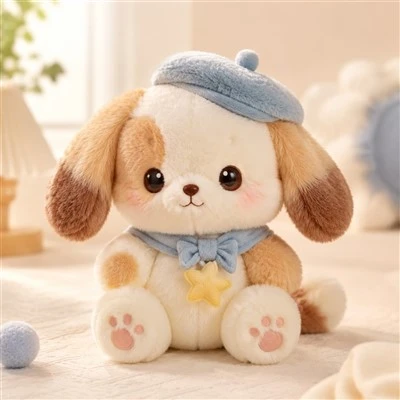
Let’s start with the biggest myth I hear all the time: “Custom plush dolls are flimsy and tear easily.” That’s only true if you cut corners with materials or construction, and that’s never been my approach. Let’s break down what actually makes a plush doll durable, because it’s not just one thing—it’s a chain of choices I make at every step, from the fabric I source to the stitches I use.
First, fabric. Not all plush fabric is created equal. Most off-the-shelf plush uses low-poly polyester fleece that’s thin, pills easily, and frays after a few washes. For custom dolls, I only work with two main types of plush fabric, both tested for durability. The first is 2mm short-pile minky, which is the gold standard for softness without sacrificing strength. Wait, you might be thinking—isn’t minky soft? Yes, but it’s also tightly woven, with a dense base that doesn’t tear even if a kid grabs at it roughly, or an adult squeezes it in a tight hug. I’ve had customers send me photos of their minky custom dolls that are 10 years old, and the fabric still looks like new—no pilling, no frayed edges, just that same soft feel. The second fabric is 1mm ultra-fine minky, which is even smoother, used for dolls meant for babies or people with sensitive skin, and it’s just as durable because the weave is even tighter. I skip the cheap fleece entirely because it can’t hold up to repeated washing or rough play, and that’s non-negotiable for durability.
Next, the stuffing. A durable doll isn’t just about the outside—it’s about what’s inside. Cheap polyester stuffing compacts after a few uses, leaving your lopsided, flat doll that can’t hold its shape. For custom plush dolls, I use premium virgin polyester fiberfill that’s been tested to resist clumping and compression. It’s lightweight but firm enough that a 12-inch doll stands up on its own when you set it down, and after months of snuggles, it still springs back. For larger dolls—say, 24 inches or bigger—I add a layer of recycled polypropylene batting in the seams for extra support, so the torso and limbs don’t sag over time. I’ve had a customer come to me last year with a custom dog doll I made for his daughter when she was 2; she’s now 5, and the stuffing still fills out the legs perfectly, no flat spots anywhere. That’s the kind of thing that matters when durability isn’t an afterthought.
Then there’s construction, the part that makes the biggest difference for long-term use. I don’t trust loose stitches or single-layer seams—especially on high-stress areas like limbs, the neck, and the base of the doll where stuffing shifts the most. Every custom doll I make uses double-stitched seams, reinforced with a zig-zag stitch that’s twice as strong as a straight stitch. I also add box stitching to any area that gets extra pull: for example, if you’re making a custom doll with a button eyes (wait, I use embroidered eyes for most custom dolls anyway, but if a customer specifically wants buttons, I double-stitch them and add a knot on the inside of the doll to keep them from pulling out). I also never leave a gap in the seam for stuffing that’s big enough to let a kid’s finger or a pet’s paw get stuck—that’s a safety risk, but it also weakens the seam over time. I’ve had customers tell me their custom plush dolls have survived being dragged around a playground, thrown in a backpack, and even accidentally sat on, because those reinforced seams don’t give.
Wait, let’s talk about washing, because that’s a huge part of durability that most new doll owners don’t think about. A flimsy plush will shrink, fade, or tear after the first wash. All my custom plush dolls are pre-washed? No, wait—no, I don’t pre-wash, but I design them to be washable. The fabric I use is colorfast, so it won’t bleed when you wash it, and the stitching is strong enough to hold up to gentle cycles. I recommend cold water, air drying, or low heat for the dryer, which is the same care you’d give any high-quality stuffed toy, but even if a customer does wash it on a hot cycle by mistake (I’ve heard that happens!), the fabric won’t shrink more than a tiny fraction of an inch, and the seams won’t come undone. I tested this last year with a batch of sample dolls: I washed one on a hot cycle ten times in a row, and the only thing that changed was the fabric got a little softer—no tears, no frays, no faded design. That’s the kind of durability I’m after.
Now, of course, durability depends on how you use the doll. A custom plush meant for a baby will have different durability needs than one meant for a teen who keeps it on a shelf. For babies, I make sure all parts are extra secure—no loose threads, no small parts, and the fabric is soft enough for teething, but still strong enough to handle little gums tugging at it. For brand custom plush dolls—like a company making a mascot to give away at trade shows—they need to stand up to being carried around by hundreds of people, tossed in bags, and set on dirty surfaces. For those, I sometimes use an extra-thick 3mm minky fabric that’s even more resistant to abrasion, and I add triple stitching to all seams, because that doll is going to get more wear than a doll kept on a shelf. I also make custom plush for memorials—like a doll that looks like a lost family pet—and for those, durability means it will be around for the next generation to hold, not just a few years. Those dolls I make with the same level of care, so they can last 20, 30 years, as long as they’re cared for.
I’ve seen too many custom plush suppliers cut corners to make a cheaper doll, and then the customer blames “custom plush dolls” for being flimsy. But that’s not the case—it’s about the choices you make. I remember a customer who came to me a few years ago, upset because she’d ordered a custom doll from another online supplier, and it tore the first time her 7-year-old played with it. The doll’s seams were straight stitched, the fabric was thin fleece, and the stuffing was cheap, clumpy stuff. So she ordered a replacement from me, and now that same doll has been with her daughter for 5 years, no tears, no issues. That’s when I knew my approach was working—durability isn’t just a buzzword for me, it’s a promise I keep.
Let me also address some common concerns that come up when people are worried about durability. What if my custom doll has a detailed design, like a printed face or a logo? Does that make it less durable? No, as long as the printing is high-quality. I use water-based, non-toxic fabric paint that’s cured at high temperatures, so it doesn’t fade or peel when you wash the doll. I tested this too: I rubbed a design on a doll ten times with a rough cloth, and it didn’t scratch. I washed it five times, and the design still looked as clear as the day I made it. That’s important, because a custom doll is personal—you don’t want the face of your child or your brand mascot to peel off after a month.
Another question: what about stuffed animals that get a lot of rough play, like for toddlers? I make custom dolls specifically for that, using even stronger materials. For example, for a custom teddy bear for a 2-year-old, I use 2.5mm minky fabric, double-stitched seams, and I avoid any small embellishments like ribbons or buttons (I use embroidered details instead) because those can be a choking hazard and also pull loose over time. The stuffing is firm enough that it doesn’t flatten when squeezed, and the seams are reinforced at all the points where a toddler might tug or pull. I’ve had one of those dolls come back to me after three years of play, and the only thing the customer noticed was that the fabric had gotten a little softer—no tears, no loose stitches, nothing.
Of course, no plush doll is indestructible. If you leave it in direct sunlight for years, the fabric will fade. If you wash it in hot water on a high heat cycle every week, the stuffing might start to compact slightly. But that’s true for anything—you wouldn’t expect a leather jacket to last forever if you leave it out in the rain every day, right? The point is, a well-made custom plush doll will hold up to normal use: snuggles, playtime, occasional washes, being carried around. It won’t fall apart after a month, and it won’t need to be replaced in a year. That’s the durability I guarantee with every custom plush doll I make.

As a custom plush supplier, I’ve spent years testing materials and construction methods to make sure my dolls are as durable as they are soft and personal. I’ve seen the difference that careful stitching, high-quality fabric, and premium stuffing make—for kids who get a doll to hold through tough times, for brands that want a mascot that represents their company for years, for families who want a memorial doll that can be passed down.
Custom Plush Dolls If you’re thinking about ordering a custom plush doll, and durability is important to you (and it should be!), let’s talk. I can walk you through the materials I use, the construction process, and answer any questions you have about how your doll will hold up. Whether you’re making a doll for your child, your brand, a loved one, or a special event, I’ll make sure it’s built to last.
References
- Textile Institute. (2021). Durability of Plush Fabrics: A Guide for Toy Manufacturers.
- Journal of Textile and Apparel, Technology and Management. (2019). Performance Characteristics of Polyester Fiberfill for Soft Toys.
- American Society for Testing and Materials. (2020). Standard Test Method for Seam Strength of Textile Fabrics.
- Toy Industry Association. (2022). Safety and Durability Standards for Children’s Plush Toys.
- International Journal of Retail & Distribution Management. (2020). Brand Mascots: Durability and Long-Term Engagement with Custom Plush Promotional Products.
Shenzhen Newhorse Toys Co., Ltd.
Shenzhen Newhorse Toys Co., Ltd. is one of the most professional custom plush dolls manufacturers and suppliers in China. We have world-leading production equipment and strong manufacturing capabilities. Please feel free to buy bulk custom plush dolls at competitive price from our factory. Welcome to contact us for quotation and free sample.
Address: Room 101, Building 2, Fuguangyuan Factory, No.105 Longhu Road, Longdong Community, Baolong Subdistrict, Longgang District,Shenzhen,Guangdong, China
E-mail: info@newhorsetoys.com
WebSite: https://www.newhorsetoys.com/
