When I first started working in the custom running medals industry three years ago, I got a call from a local race organizer who asked a simple question: “How much should I budget for my finishers’ medals?” Back then, I gave a rough estimate based on what I’d seen at other events. Today, as someone who’s spent hundreds of hours working with race directors, designers, and manufacturers, I can tell you that the answer isn’t as straightforward as it might seem. The average price of a custom running medal for an event depends on so many factors – and understanding those factors is key to getting a medal that fits your budget without cutting corners on quality or impact. Running Medals
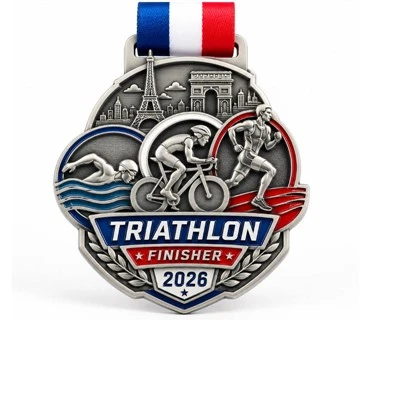
Let me start by setting the baseline. From my experience working with events of all sizes – from 5K fun runs with 100 participants to marathons with 50,000 runners – I’ve found that the average cost per custom running medal falls between $3.50 and $12. That range might seem wide, but it reflects the huge differences in what organizers are looking for. A small community 5K might opt for a simple, flat medal with basic engraving, while a destination marathon might go all out with 3D elements, soft enamel colors, and custom packaging. I’ve seen race directors come in with a $500 budget for 150 medals and others with a $50,000 budget for 10,000 medals – and both get medals that work for their events.
The first thing that affects price is the size and thickness of the medal. I always explain to new clients that medals are measured in millimeters, and every extra millimeter adds cost. A standard 5K medal might be 50mm in diameter and 3mm thick, while a marathon medal is often 70mm and 5mm thick. Thicker medals use more metal, and larger sizes mean more material – so that alone can add $1 to $3 per medal. Last year, a 10K race client told me they wanted a “substantial feel” for their finishers, so we went with 60mm medals at 4mm thick; that choice added about 20% to their per-unit cost compared to a 50mm version.
Next, the type of finish and colors make a big difference. The most basic finish is a plain metal – usually gold, silver, or bronze plating – which is the least expensive. But if you want vibrant, solid colors, soft enamel is the way to go. Soft enamel medals have recessed areas filled with colored enamel, then polished to a smooth finish. That process adds labor, so soft enamel medals typically cost $2 to $4 more than plain metal ones. I’ve also seen clients go with hard enamel, which is more durable and has a shinier, glass-like finish – perfect for medals that will be displayed for years. Hard enamel adds even more, usually another $1 to $2 per unit. Then there are specialty finishes: antique bronze, gold plating, glow-in-the-dark elements, or even 24k gold accents. One mountain bike race I worked on wanted a matte black finish with a gold paw print – that combination cost about $8 per medal, but the race sold out of their medal packages before the event even started.
The design complexity is another major factor. A simple circular medal with text and a basic logo is going to be cheaper than a medal with multiple layers, 3D elements, or custom shapes. For example, a medal shaped like a shoe or a race bib takes more tooling and production time, which drives up the cost. I had a client who wanted a medal shaped like their city’s iconic bridge – we had to create a custom mold for that, and while the per-unit cost was a bit higher, the design made their event’s medals go viral on social media. Even adding extras like a ribbon, a safety pin, or a custom hook adds to the price. Ribbons themselves vary – a basic satin ribbon is standard, but if you want a double-layer ribbon with custom printing, that’s an extra $0.50 to $1 per medal.
Participant volume is something I see all the time, and it’s a huge driver of cost. The more medals you order, the lower the per-unit price. For example, if you order 100 medals, you might pay $7 each, but if you order 1,000, that same medal could be $4.50 each. Manufacturers give volume discounts because larger orders are more efficient to produce. I once worked with a marathon that was 10,000 runners – they locked in a price of $5.20 per medal, which was way lower than a 5K race’s $9 per medal for 200 units. But there’s a catch: if you order too few, you might have to pay a setup fee. Most manufacturers require a minimum order quantity, usually around 100 to 200 medals, and ordering below that can lead to higher costs. That’s why it’s important for race organizers to estimate their participant numbers accurately – ordering 50 extra medals is cheaper than having to pay a premium later if they underestimate turnout.
Custom packaging and additional touches are the icing on the cake, but they can also add to the price. Some race organizers just want a medal with a basic ribbon, which is straightforward. Others want a velvet pouch, a custom box, or a small insert with the race’s results or a thank-you note. One charity run I worked on wanted their medals in a small canvas bag with the race’s logo – that added about $1.50 per medal, but the charity reported higher donor engagement because of the extra packaging. Even adding things like a small charm or a detachable element to the medal will increase the cost. I always tell clients to think about what their runners will actually appreciate – sometimes a well-made medal without extra frills is more impactful than a fancy one with unnecessary add-ons.
Now, let’s talk about specific examples from recent events to make this concrete. Last month, I helped a local 5K for a school fundraiser. They had 250 participants, wanted basic soft enamel medals with a school logo, 50mm diameter, and a satin ribbon. The total cost came to $4.80 per medal. A few weeks before that, a half-marathon in a nearby city ordered 5,000 medals: 65mm, 4mm thick, soft enamel with a city skyline design, double-layer custom ribbon, and small metal charms for each finisher. Their cost was $6.75 per medal. And earlier this year, a small trail run with only 150 participants wanted a premium hard enamel medal shaped like a pine tree, with antique bronze finish and a glow-in-the-dark star on the back. That one came out to $11.20 per medal.
I should also mention that there are hidden costs that can add up if you’re not careful. Design fees, for example – most manufacturers include a few design revisions in their price, but if you want major changes or a completely custom illustration, that can add $50 to $200. Shipping is another one; if you’re ordering from overseas, you might have to pay import fees and shipping, which can add 10 to 20% to your total cost. I always advise clients to ask for a quote that includes all fees – some manufacturers advertise a low per-unit price then add shipping or setup fees later, which can throw your budget off.
A common mistake I see race organizers make is choosing the cheapest option without considering quality. A medal that costs $2.50 might seem like a great deal, but it’s likely made of thinner metal, has faded colors, and will break easily. Runners want a medal they can be proud to display – something that reminds them of their achievement for years. I’ve had clients tell me that their medals were talked about for months after the race, which led to higher registration numbers the next year. Investing a bit more in a good quality medal can pay off in terms of event success.
On the other hand, you don’t need to spend a fortune to make a great impression. I worked with a small community run last year that had a budget of $3 per medal. We went with a plain bronze medal, 50mm, with basic engraving and a simple ribbon. The race sold out in three days, and many runners posted photos of their medals on social media. It wasn’t the most elaborate medal, but it was meaningful because it represented their hard work. So it’s not just about how much you spend – it’s about matching the medal to your event’s mission and audience.
If you’re a race organizer trying to figure out your budget, here’s what I recommend. First, decide what’s most important to you. Is it size, color, design, or packaging? If you’re focused on keeping costs low, stick to a standard size and basic colors. If you want something unique for a destination event, you can allocate more of your budget to the medal. Second, estimate your participant numbers as accurately as possible – that will help you get a better quote. Third, ask for a detailed quote that includes all costs, so there are no surprises later. And finally, don’t be afraid to work with a supplier who can guide you – I’ve had clients come in with a vague idea of what they want, and together we’ve created a medal that fits their budget and their vision.
Running medals are more than just a piece of metal with a ribbon. They’re a symbol of a runner’s hard work, a memento of their event, and often a way to support a cause or bring a community together. That’s why I’ve been in this industry for three years – because I get to help race organizers create something that runners will cherish. Whether you’re planning a small 5K or a large marathon, understanding the factors that go into the price of a custom running medal will help you make a decision that works for your event and your budget.

If you’re planning an upcoming run and want to talk about custom medals, I’m here to help. We can walk through your ideas, answer your questions about pricing, and create a medal that your participants will love.
Baseball Medals References
- Running Industry Association. (2023). State of the Sport Report: Finishers’ Medal Trends and Event Budgets.
- Custom Medal Manufacturing Association. (2022). Cost Factors in Custom Sport Medals: A Comprehensive Guide.
- Runner’s World. (2023). How Event Medals Impact Race Registration and Participant Engagement.
Global Art Gifts Co., Ltd.
Global Art Gifts Co., Ltd. is one of the most professional running medals manufacturers and suppliers in China. We are committed to providing high quality customized products with competitive price. Welcome to buy bulk durable running medals in stock here from our factory. Also, pricelist is available.
Address: Hushan Tech Park, Shiwan, 516127 Huizhou China
E-mail: nicole@globalartgifts.com
WebSite: https://www.globalartgift.com/
