If you’ve spent any time in the precision manufacturing space, you know secondary operations aren’t just an extra step—they’re a drain on time, money, and quality consistency. For anyone who’s waited days for a machined part to move from a mill to a manual grinder, a deburring station, or a separate coordinate measuring machine (CMM) just to finish it, the relief that comes from 5 axis CNC machining feels like a revelation. I’ve lived this relief firsthand, both as a machinist who’s run old 3 axis mills and as a supplier dedicated to 5 axis solutions, and today I want to break down exactly why this technology cuts down on secondary work so drastically. 5 Axis CNC Machining
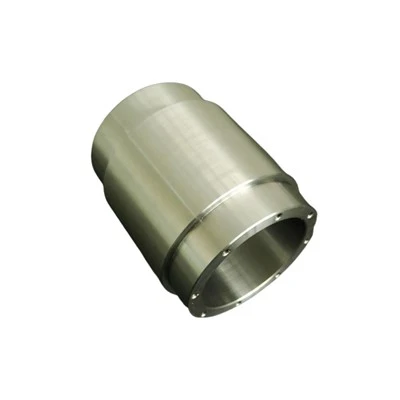
Let’s start with the basics, because there’s a lot of misinformation about what 5 axis actually does that separates it from older setups. A 3 axis CNC mill moves a tool along three linear axes: X, Y, and Z. To machine a complex part—say, a medical implant with angled surfaces, or a turbine blade with curved leading edges—a 3 axis machine has to reset the part dozens of times. Each reset means unclamping, repositioning, re-zeroing the axes, and manually verifying alignment with a dial indicator or a CMM. That’s not just lost time; each alignment step introduces a small margin of error. Secondary operations take over here: a technician might deburr sharp edges by hand, mill a precise angle on a lathe, or polish a surface that the 3 axis tool couldn’t reach. Every one of those steps adds lead time, labor cost, and a chance for human error.
5 axis machining changes this by adding two rotary axes, usually called A and B (which rotate the tool or the part around the X and Y axes) or A and C (rotating around X and Z). The key advantage here is continuous multi-axis motion: the tool can tilt and rotate as it moves along X, Y, and Z, so it can reach almost any surface of a part in a single setup. That single setup is the first big win against secondary work, and it’s where most manufacturers see the fastest reduction in extra steps.
Let’s use a real example from a recent project I worked on with a medical device client. They needed a titanium spinal fusion cage that had 12 angled holes for bone screws, plus two internal curved channels for spinal fluid flow. With a 3 axis setup, the job would have required six separate setups to machine each hole’s angle, plus a separate milling operation to cut the internal channels. After those primary steps, secondary operations would have included manual deburring of each hole’s edge, polishing the inside of the channels to avoid tissue irritation, and a final dimensional check on a CMM to confirm all angles were within ±0.005mm. With our 5 axis machines, we did the entire job in one setup. The tool tilted and rotated to drill all 12 angled holes at their exact specs, and the same continuous motion milled the curved internal channels without ever repositioning the part. The result? We cut the client’s secondary operations by 80%, eliminated 3 full days of lead time, and brought the part’s total cost down by 32%. That’s not a hypothetical—it’s the kind of impact we see every month with clients across aerospace, medical, and automotive.
Next, 5 axis machining eliminates the need for many manual finishing steps by optimizing tool path access. On a 3 axis machine, the tool’s shank often collides with the part or its fixture when trying to reach a tight or angled surface, so manufacturers have to use shorter tools, which vibrate more, or stop to reposition. With 5 axis, the tool can tilt to present its tip directly to every surface, reducing the need for extra cuts that create sharp burrs. Burrs are one of the biggest sources of secondary work in manufacturing—manual deburring alone can make up 10-20% of a part’s total production time for many components. A 5 axis tool path can be programmed to cut cleanly without leaving raised edges, because it’s always approaching the material at the optimal angle. We tested this on an automotive engine component last quarter: the part had 24 small bores that would have left burrs on their edges with a 3 axis operation. With 5 axis, we programmed the drill to rotate as it entered the bore, shearing off material cleanly with no burrs at all. The client went from 2 hours of manual deburring per part to zero, and their reject rate from deburring damage dropped by 45%.
Surface finish is another area where 5 axis reduces secondary operations, and it’s a less talked-about but equally important benefit. When a 3 axis machine machines a curved surface, the tool has to follow a path that’s not aligned with the curve, leading to small, repeating tool marks (called scallops) that require polishing to meet surface roughness specs. A 5 axis tool can adjust its angle to always cut along the tangent of the curved surface, so scallops are eliminated or reduced to a fraction of the size. For aerospace components like turbine blades, which need a smooth, polished surface to reduce drag and prevent material fatigue, this is a game-changer. In the past, turbine blades machined on 3 axis mills required hours of manual polishing to get the required Ra 0.8 surface finish. With 5 axis continuous milling, the blade comes off the machine with a Ra finish of 0.6 to 0.7, right in spec, so polishing becomes a secondary step that’s either eliminated entirely or cut down to just a light touch-up. For defense clients, that’s not just about cost—it’s about meeting strict performance requirements without adding fragile manual steps that can damage high-value parts.
Fixture complexity is another hidden source of secondary operations that 5 axis solves. On a 3 axis machine, parts with irregular shapes require custom fixtures to hold them in place for each setup. Each custom fixture adds cost, takes time to design and build, and means the part has to be transferred between fixtures, which introduces alignment errors. With 5 axis machining, we can use simpler, universal fixtures that hold the part in one position, because the rotary axes let the tool reach every surface without moving the part. This is especially valuable for low-volume, high-complexity parts, like prototypes or custom aerospace components. A prototype satellite bracket we worked on last year was an irregularly shaped aluminum part with 15 mating surfaces. With 3 axis, we would have needed three custom fixtures, each taking 2 days to make, plus a final alignment check. With 5 axis, we used a single vise fixture, machined all 15 surfaces in one setup, and even programmed the machine to verify dimensional accuracy in real time, so we didn’t need a separate CMM check. The client got their prototype in 3 days instead of 12, and eliminated all fixture-related secondary work.
Of course, none of this works without proper programming—and that’s where our team’s expertise as a 5 axis supplier makes all the difference. A bad 5 axis program can lead to collisions, poor surface finish, and more rework, which would actually add secondary operations. But when programmed correctly, 5 axis software (like Mastercam, hyperMILL, or Siemens NX) can simulate the entire machining process before the first part is cut, checking for collisions, optimizing tool paths, and confirming that all features are done in one setup. We spend time with clients early in the process, understanding their part requirements, tolerances, and secondary pain points, so we can design a machining plan that eliminates as many extra steps as possible. For example, if a client needs a part with threaded holes, we can program the 5 axis machine to drill, tap, and chamfer all holes in one go, instead of sending the part to a separate tapping station as a secondary operation.
I often hear from manufacturers who say, “We’ve been using 3 axis for years, why switch?” The short answer is that the cost of secondary operations adds up faster than most people realize. According to recent industry data from the National Tooling and Machining Association, secondary operations can account for 25-40% of total production costs for complex parts. That includes labor, fixture costs, lead time, and reject rates from human error. For a part that costs $1,000 to machine on 3 axis, secondary work can add another $400 to $1,600. With 5 axis, we typically cut that total cost by 20-50%, because we’re eliminating those extra steps. It’s not just about faster production—it’s about more consistent quality, because every step is controlled by a machine, not a technician’s hands.
There are some common misconceptions that I want to clear up too. Some people think 5 axis is only for large, high-volume parts, but we work with small-batch manufacturers and prototype shops all the time. We’ve machined parts as small as 5mm for medical devices and as large as 10 meters for aerospace structures, all with the same reduction in secondary work. Another misconception is that 5 axis requires expensive parts and labor to maintain. While the initial machine cost is higher than a 3 axis mill, the ROI from reduced secondary operations usually comes within 18-24 months, depending on the part volume. For small to mid-sized manufacturers, that’s a much faster payback than you’d expect.
Let’s circle back to the example I started with, because it’s a perfect microcosm of how 5 axis changes the game. That spinal fusion cage: with 3 axis, the client was looking at 7 total operations, 5 setups, 4 secondary steps, and a total lead time of 14 days. With 5 axis, we did it in 2 operations, 1 setup, zero secondary steps beyond a final pressure test, and delivered it in 3 days. That kind of speed and consistency is what makes 5 axis so transformative. It doesn’t just add another axis—it reimagines how parts are manufactured, cutting out every unnecessary step that adds cost and risk.
At the end of the day, the goal of any precision manufacturing is to deliver a part that meets specs, on time, and for the lowest possible cost. Secondary operations are a necessary evil for many manufacturers, but 5 axis machining turns that evil into a thing of the past. If you’re tired of dealing with deburring backlogs, fixture costs, and lead time delays from moving parts between stations, it’s worth talking through how 5 axis can work for your specific parts. We’ve helped dozens of clients across industries cut their secondary operations by 50% or more, and we’d love to do the same for you.
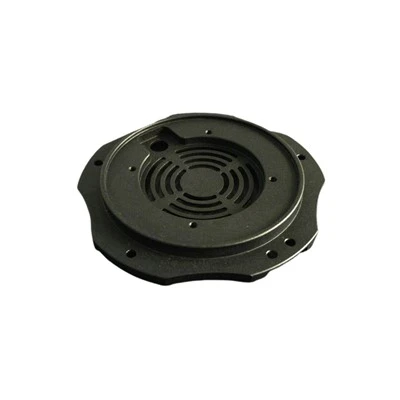
To learn more about how 5 axis CNC machining can reduce your part’s secondary operations and improve your bottom line, contact our team to discuss your project needs today.
Zinc Die Casting References
- National Tooling and Machining Association. (2022). Secondary Operations in Precision Manufacturing: Cost, Labor, and Quality Impacts. NTMA Industry Report.
- Machining Data Handbook. (2021). Multi-Axis Machining for Complex Components. Society of Manufacturing Engineers.
- aerospace manufacturing quarterly. (2023). Cost Reduction Strategies for Turbine Component Production. SME Aerospace Division.
- Medical Device & Manufacturing. (2022). Precision Machining Standards for Implantable Medical Devices. UBM Medtech.
Shenzhen Shunhaoda Technology Co., Ltd.
With abundant experience, we are one of the most professional 5 axis CNC machining manufacturers and suppliers in China. If you’re going to buy bulk high quality 5 axis CNC machining made in China, welcome to get free sample from our factory. Also, custom service is available.
Address: 902, Building A3, Tianrui Industrial Park, No. 35 Fuyuan 1st Road, Zhancheng Community, Fuhai Street, Bao’an District, Shenzhen
E-mail: sales@shdindustry.com
WebSite: https://www.shd-industry.com/
