If you’ve ever shopped for a new office chair, you’ve probably skimmed product specs and stopped at line items like “fixed base” or “swivel base”—but I bet you didn’t dig much deeper than that. As someone who’s spent the last 12 years running an office chair base supply operation, I’ve seen first-hand how many buyers skip over this detail, only to end up with a chair that’s awkward for their daily work, or even worse, unsafe. Let’s break this down, not just as a supplier who sells both options, but as someone who’s talked to hundreds of office managers, remote workers, and ergonomic specialists who’ve learned the hard way why the base choice matters. Office Chair Base

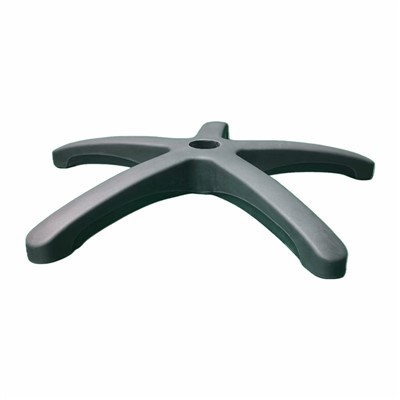
First, let’s start with the basics: what each base actually is. A fixed office chair base, as the name suggests, is a rigid, stationary frame that doesn’t rotate. Most fixed bases are made from steel, aluminum, or heavy-duty plastic, shaped like a cross or four-pointed star (sometimes five, though four is more common for entry-level models) to spread weight evenly across the floor. A swivel office chair base, by contrast, is designed with a central pivot mechanism that lets the seat rotate 360 degrees, no need to lean or twist your whole body to reach a desk drawer or a second monitor. That pivot is the key difference, and it changes nearly every part of the chair’s performance.
Let’s talk about stability, because that’s the first thing people notice when they sit down. Fixed bases score higher here, no question. Their rigid frame distributes the chair’s entire weight—plus your weight, plus any items you might rest on the armrests, like a laptop or a stack of folders—over a larger, unchanging footprint. I once worked with a warehouse manager who bought 20 fixed base chairs for their packing station, and they told me a few months later that no one had reported a tip-over or even a wobbly feel, which had been a constant problem with their old swivel base chairs. That makes sense: swivel bases have moving parts, so their center of gravity is a little off. The pivot point, while engineered to be strong, can create a slight tilt if you lean to one side too hard, or if the base is made with lighter materials. But wait—before you write off swivel bases as unstable, let’s add a caveat. Modern swivel bases, especially the heavy-duty ones we supply for industrial or high-use environments, have reinforced pivot mechanisms and extra support beams that make them nearly as stable as fixed bases. The trade-off is that you have to pay attention to the base’s load capacity; a $20 cheap swivel base will be less stable than a mid-range fixed base, but a $150 professional swivel base will outperform an entry-level fixed one every time.
Next up: movement and functionality, which is where the two bases diverge most. Fixed bases are for spaces where you don’t need to turn much. They’re ideal for desks that are against a wall, or for workstations where the only thing you need to reach is a single surface within arm’s length. If you’re a data entry clerk who stays in one spot for 8 hours straight, a fixed base is perfect—no risk of the chair spinning unexpectedly while you’re typing, which can throw off your posture. But for anyone who moves around their workspace? Swivel bases are a game-changer. Remote workers who share a desk with a partner, office staff who need to grab files from a side cabinet, designers who toggle between a sketchpad and a computer monitor across the desk—swivel bases cut down on torso twisting, which reduces back strain over time. That’s not just a subjective benefit; ergonomic specialists back this up: constant twisting to reach items can pull on spinal muscles, leading to soreness or even chronic issues after years of use. I’ve had a lot of freelance designers reach out for swivel bases because they noticed less midday back pain, and that’s a common feedback we get.
Material and build quality are also tied to each base type, though there’s overlap. Fixed bases have fewer parts, so they’re often cheaper to manufacture, which means entry-level office chairs almost always use fixed bases. But that doesn’t mean they’re low-quality—we supply fixed bases made from powder-coated steel that can hold up to 500 pounds, perfect for heavy users. Swivel bases have more components: the pivot stem, ball bearings, retention clips, sometimes a locking mechanism to keep the chair from spinning. That means they can be more expensive, but they’re also more versatile. Some swivel bases even come with adjustable tilt locks or weight adjustment features, which fixed bases rarely have. The trade-off with swivel bases is maintenance: the pivot parts can collect dust, hair, or small debris, which can make the swivel feel stiff over time. Fixed bases, with no moving parts, require almost no upkeep—just a quick wipe down every few months. That’s a big plus for busy office managers who don’t want to schedule regular chair maintenance.
Durability is another point where the two bases differ, depending on use. Fixed bases tend to last longer in low-movement environments, because there’s no wear on moving parts. A fixed base in a quiet home office might last 10 years or more, with just occasional tightening of the chair’s bolts. Swivel bases, though, hold up better in high-traffic areas where movement is constant. If you have a call center with 50 chairs that are spun around all day every day, a good swivel base will outlast a cheap fixed base by a couple of years, because it’s engineered to handle repeated motion. I’ve seen cheap swivel bases fail quickly, though—usually because the ball bearings wear out or the pivot stem bends from leaning too far. That’s why it’s important to choose a supplier that uses heavy-duty materials for swivel bases: the pivot should be made from solid steel, not thin aluminum, and the ball bearings should be sealed to keep out debris.
Now, who should choose which? Let’s break it down by use case, based on the conversations we have with our customers. If your workspace is static: a desk against a wall, a packing station, a classroom desk, a fixed base is the way to go. They’re affordable, stable, and low-maintenance. If you need to move frequently: a modern open office, a home office with multiple monitors or storage across the room, a call center, a creative workspace—swivel bases are the better choice. There are exceptions, of course: some people just prefer the feel of a fixed chair, even in a dynamic space, but that’s a personal preference. I once had a customer who worked from a standing desk that converted to sitting, and they told me a fixed base was better because when they stood up, the chair didn’t spin away from the desk. That’s a small detail, but it’s exactly why I talk to every customer about their specific workflow before recommending a base.
One common misconception I hear from buyers is that fixed bases are only for cheap chairs, and swivel bases are the premium option. That’s not true. We supply both fixed and swivel bases in every price range, from entry-level for temporary workspaces to heavy-duty for 24/7 use. The difference isn’t quality—it’s function. A premium fixed base will be more durable than a cheap swivel base, and a mid-range swivel base will be more than enough for most office needs. The key is to match the base to how the chair will be used, not just the price tag.
Another thing to consider is floor type. If you’re working on a hardwood floor or tile, a fixed base might slide a little if you lean forward, because it doesn’t have the same low-friction pivot. Swivel bases often come with caster wheels, same as fixed bases, so that’s a non-issue. But if you have a soft carpet that’s thick, the spread of a fixed base can help keep the chair from sinking into the pile as much as a smaller swivel base. We usually recommend adding base sliders for fixed chairs on hardwood, to prevent scratches and make movement easier.
At the end of the day, the choice between a fixed and swivel office chair base comes down to two things: how much you need to move while sitting, and how important stability and low maintenance are for your space. As an office chair base supplier, I’ve seen buyers rush this decision and regret it later. A wrong base can lead to unnecessary strain, frequent repairs, or even early replacement of the entire chair, which is a waste of money and resources.
If you’re in the market for a new base, or you’re looking to replace old ones in your office, don’t just go by what looks good or what’s the cheapest. Think about your daily workflow: do you twist to reach things, or stay in one spot? Do you have time to maintain moving parts, or do you need something that will last with almost no care?
If you’re ready to find the right base for your needs, or you want to ask more about load capacity, material options, or maintenance tips, feel free to reach out. We can help you pick the best option for your space, whether it’s a fixed base for a quiet home office or a heavy-duty swivel base for a high-traffic work area.
Chair Back Frame References
Ergonomic Assessments of Office Chair Base Designs, Journal of Occupational and Environmental Hygiene, 2021
Office Furniture Durability Standards, Business and Institutional Furniture Manufacturers Association (BIFMA), 2022
Workplace Movement and Musculoskeletal Strain: A 5-Year Study of Office Workers, Journal of Applied Ergonomics, 2020
Fixed vs. Swivel Base Performance in High-Use Workspaces, Industrial Furniture Review, 2023
Dongguan Weihong Furniture Co., Ltd.
As one of the most professional office chair base manufacturers and suppliers in China, we also support customized service. We warmly welcome you to buy high quality office chair base made in China here and get pricelist from our factory. For price consultation, contact us.
Address: No.145, Qingzhang Road, Changshantou Village, Qingxi Town, Dongguan City, Guangdong Province, China
E-mail: 1243042726@qq.com
WebSite: https://www.whfurni.com/
